
Master of Fine Arts thesis · 2016 · School of Theater, Dance and Performance Studies, University of Maryland, College Park
“Nyam chiem” Reconstructing and Performing Nightmare: A Dance Research in Performance of Sleep Paralysis
Thesis directed by Associate Professor Karen Kohn Bradley.
Advisory committee
- Professor Karen Kohn Bradley, Chair
- Professor Miriam Phillips
- Professor Sara Pearson
- Professor Adriane Fang
Abstract
This paper is a documentation of a practice-based dance work of the creative process, research and performance presentation of the piece “Nyam chiem.” This thesis examines the phenomenon sleep paralysis through a personal reflexive research. The research is in two parts; practical and theory. The practical component includes; dance rehearsal processes, performance and staging of the piece as presentation. The theory component includes the documentation of the work in a written format capturing of personal stories, and salient issues arising from the process in a scholarly paper. This work challenges the notion that sleep paralysis is evil, revealing the phenomenon as a normal part of the human experience.
Chapter 1: Introduction
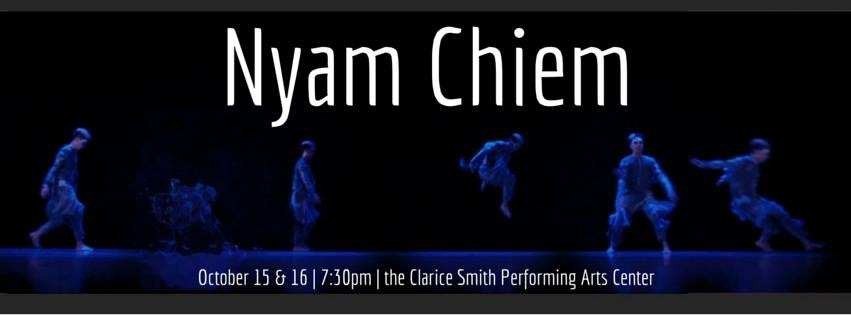
This paper is a documentation of a practice-based4 dance work of the creative process, research and performance presentation of the piece “Nyam chiem.” The paper and the dance work are part of my required thesis project in the Masters of Fine Arts degree in dance at the University of Maryland, College Park. Dates of performances of the work were October 15th and 16th 2015, in the Dance Theater at the Clarice Smith Performing Arts Center.
In the first chapters, I share my personal view of the topic and phenomenon known as sleep paralysis. I note the numerous accounts of the phenomenon ranging from scientific research to cultural beliefs and to personal accounts. My choice to focus on my personal experience is deliberate because I feel as though sleep paralysis as a condition can only be experienced, felt and talked about in a very personal way, furthermore, there are certain stigmas about the meaning of sleep paralysis in Nigeria, my country of birth. In this paper I include scientific research and various personal accounts, but in the choreographic work I was primarily informed by my personal experience. To this end, I will be weaving my personal journal, memories and thoughts intermittently into the fabric of the narrative writing style of this thesis paper.
Background to the study
In the early 1990s, when I was just only eight years old or nine (my memory is a little fuzzy on that), I remember a celebration of the life of someone who had died in the family. Like every Nigerian burial ceremony, extended families and friends trooped to this event. I can vividly remember that on the morning after the big dance and chiefs Isie-gware.5 I woke up to the chants of “Amen, Amen,” the normal Nigerian Pentecostal fire and brimstone prayer led by my mother with the usually accompanied singing and speaking in tongues. As soon as I was awake I was quickly aware of a feeling of energy directed at me. I could tell from the prayer points6 that the chanting was about something I had done or something that had happened to me during the night.
I still have memories of the nightmare and at the time I believed only I knew about it, until my mother started saying, “All the demons of the night, which pay an unsolicited visit to Ogaga7 I command you to die by fire.” I flinched in instant shame. I quickly closed my eyes, feigning to be asleep, until I was tapped by one of my uncles to wake-up and join the prayer.
What followed was weeks of prayers and embarrassing altar calls on Sunday services at the church, and with ceremonies that looked like exorcism,8 with holy water sprinkling and holy oil rubbing.
For months and years I continued with dreams and frightful nightmares and sensations of different presences in my room and the feeling of people touching me at night. At the age of 24 when I was able to afford and own a smartphone to browse the Internet, my first search was something around “what is the experience of not being able to move while asleep in the night called?” I got many search results but one stood out: sleep paralysis! I went further to search for what sleep paralysis meant. The explanations sent shivers through my spine because they felt accurate and I knew I wasn’t the only one experiencing this phenomenon. It became a life goal for me to both exonerate myself from the claims of being demon infested and abnormal and to reclaim my humanity.
Cultural background
I come from a multi-religious community. My cultural background incorporates social values, rituals from traditional religions and orthodox worship. The magic of the mixture of Christianity, Islam and traditional religion is very strong. In those religious practices dwells a huge amount of beliefs in supernatural beings, and other superstitions. Part of these superstitious beliefs includes the notion that an individual member of such group is clean and free from sinful, demonic and unrighteous blemishes. Therefore, I’ve always been curious about the idea that one has to be free of any blemish.
How I met dance
I met dance at the University of Benin when I was in my second year studying Theater Arts, when we were assigned to study and perform the Tiv Swange dance.9 I had been very fascinated with the style from a very young age watching the Tiv Kwaghir10 puppet dancers and the Swange dancers dance on the local television channel NTA Abuja (Nigerian Television Authority). The flow of movement from the spine into the torso and the staccato tapping of the feet that sends a wave through to the hips making them sway from side to side felt like a natural part of my entire being. I watched the television performances attentively. I couldn’t have been happier when my class was charged to study this style for the semester. I thought this project would be a good way to start dancing, something I never thought I would do. After our first showing to the professor, I was chosen to be the group leader and also the lead singer. We performed Swange at the examination. From then on I talked, ate, slept, read and danced dance. My life completely changed and the dance studio became my new home.
Masters degree in dance
Five years after I graduated with the BA Degree in Theater Arts, I decided I needed more skills to be able to teach dance. I made plans to attend the University of Maryland, College Park.
After a twenty-five hour-long flight I landed in the United States of America, traveled to my new home, I was exhausted and ready to just sleep. I was concerned that there would be a sleep paralysis episode because I was so tired and indeed there was one. After I woke up, I knew I had had an episode and I thought my housemates would wonder what a freak had come from Africa. The episodes continued even as I settled down in my new environment. Sometimes, I asked myself “What do they think is happening to me when they hear me screaming and calling for help? Do they actually hear and not say anything in the morning,” I wondered.
In my second year in the program I began to become aware of what I could say with my dancing. I toyed with idea was of making a piece about my sleep paralysis. I created a site-specific performance at the Stamp Gallery at the University of Maryland under the guidance of Sharon Mansur. The piece was about confinement, tying it to the lingering idea of sleep paralysis. I later took this idea of confinement into the creation of “Nyam chiem.”
Below is a raw note and journal entry from my earliest articulation of the idea:
Visitation to the very beginning – Proposal for the performance vision:
I started from the idea of creating a surreal environment of the human mind and what happens in that environment while a person is going through an episode of sleep paralysis. In an episode of sleep paralysis the sufferer goes through different stages of sleep/dream activities; sleep, relaxation, REM (Rapid Eye Movement), dreams, paralysis, realization, awakening, struggling to move, encounter with scary images and slowly approaching the physical world. The concept of my current research performance work, therefore, exists at the following levels: the present, dreams, fantasy, and reality – present after the experience -. The sufferer has always feared this condition is life threatening, and thus, the subtle realization that it is not, becomes life changing.
My artistic aim is to create in-performance an episode of sleep paralysis. I visualize the stage, in this case, the Dance Theater at the Clarice Smith Performing Art Center at the University of Maryland College Park, to be the mind of an individual who is experiencing this. The brain, as science has presented, is the most complex unit of the human system and is the tangible tissue found in the skull. While I use the brain and mind interchangeably, it is important to note that the brain is the physical tissue that generates the thought faculty of the thought, perceptions, will, emotions and imagination. A look at the cerebral functionality and its process in all its complexity will enhance this work as it grows. I am looking at using the Dance Theater as a site for this work, placing the audience in different parts of space and performing the work in and around them. This is because the work explores the mind and environment, and the Dance Theater is the environment and the mind is where all this is taking place. The audience is experiencing actions in this surreal environment as it unfolds. (Emoghene, Thesis Propasal and Personal Journal 2014).
From the personal I began the exploration of scholarly research about sleep paralysis.
Chapter 2: Review of research materials in creative narratives
Research: Literature review
In this chapter, I am concerned with both philosophical and biomedical research in psychology, and how that translates to dance making. But the perspective from which I write is autobiographical11 Conversely, I use the personal pronoun “I” to acknowledge that the bone of autobiographic research is reflexive practice.
Research questions
1. In a personal autobiographical research, how does sleep paralysis intersect with my dance creation?
2. How can I translate my experiences and autobiographical research of sleep paralysis to a dance creation?
3. What can sleep paralysis be a metaphor of and might that have meaning for others who experience my work?
What brought me to this research?
I have suffered from sleep paralysis all my life. It has been both embarrassing and a stigmatic experience for me while growing up, mostly because from the community where I’m from, sleep paralysis is seen as evil; the sufferer is demonized.
Definition
There are so many definitions about what sleep paralysis is. Different disciplines and cultures see the phenomenon differently. Scientists have defined it using the scientific methods, and individual cultures have also described it from their worldviews and philosophical methods.
I particularly relate to James Allan Cheyne’s definition of sleep paralysis and his works on the subject as well. Cheyne defines sleep paralysis as:
A brief paralysis experienced when falling asleep or waking up. It is often accompanied by vivid imagery and extreme fear. In addition to the fear during episodes, people often report marked distress following episode (Cheyne, Pnneycook 2013, 16).
Cheyne and Pennycook further examine sleep paralysis as:
A brief pre- or postdormital paralysis often, but not always, accompanied by vivid sensory and perceptual experiences, including complex hallucinations (called hypnagogic hallucinations when occurring predormitally and hypnopompic when occurring postdormitally) and, almost invariably, intense fear. (Cheyne, Pennycook 2013, 16).
Despite the general paralysis during SP episodes, there are eye movements and continued automatic breathing, though the inability to breathe voluntarily may produce feeling of pressure on the chest and suffocation. SP can range from a once-in-a-lifetime experience to a recurring phenomenon consisting of frequent episodes occurring in bouts with nightly or multiple nightly episodes. (Cheyne, Newly-Clark and Rueffer, 1999, 8: 313-318).
Fun facts about sleep paralysis
It happens at nighttime.
It happens in your dreams.
It heightens your senses.
You develop a new way of knowing12.
Hallucination, hallucination, hallucination.
The experience of sleep paralysis for me is divided into these three parts 1. Visual- Hallucination: the feeling of sensed presence in your room 2. Tactioception: the feeling of choking, pressure on the chest and
heighten sense of touch
3. Audio-visual stimulation along with intense hallucination
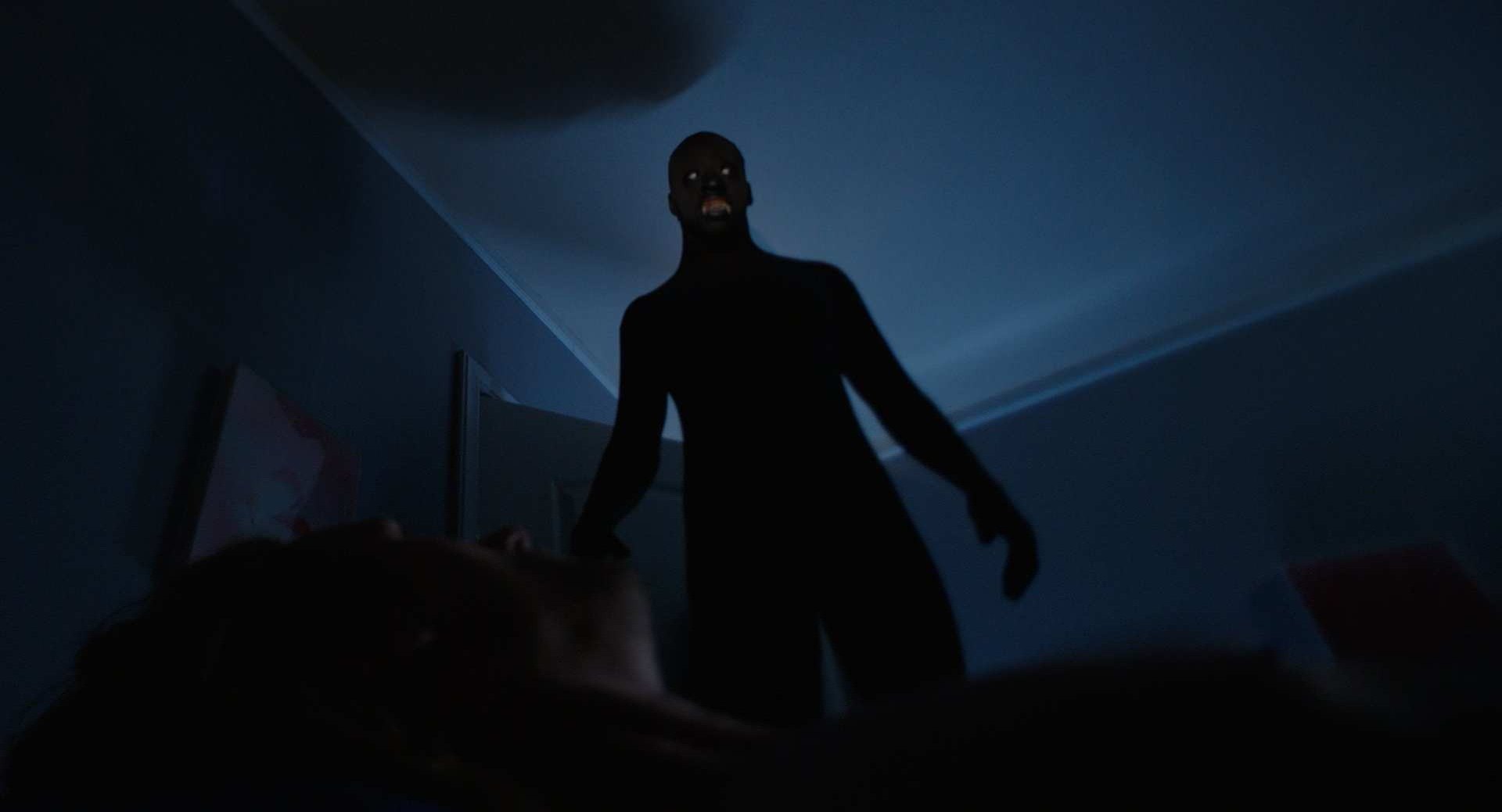
Visual-hallucination: In the experience of sleep paralysis, one always senses an unwelcomed presence in one’s room.
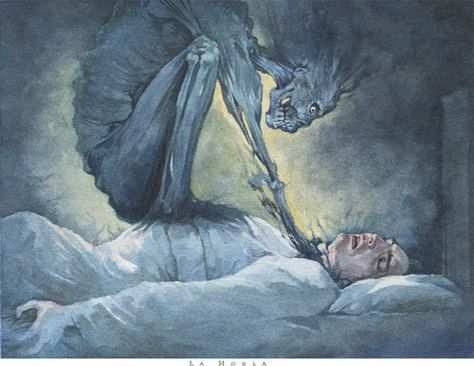
Tactioception: With the sensed presence in the room comes the feeling of attack. The scary invader is thought to be able to attack physically the experiencer, thus causing an enormous amount of fear.
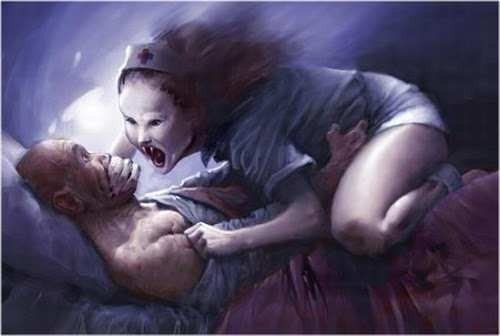
Audio-visual hallucination: This comes with the thought that one is able to hear voices, hear sounds, and even have a conversation with any sensed presence. In my personal experience, I have had situations where I screamed out loud to any such sensed presence in an attempt to dispel them.
Tracing the Origins of Sleep paralysis:
Looking at the origin of sleep paralysis in a broader and more general frame seems unclear; one of the reasons being the associated stigma as reiterated in Gonzalez:
It is difficult to get an accurate sense of just how many people suffer from sleep paralysis because of varying degrees of cultural knowledge, along with fear of stigma (Gonzalez 2015, (fall): 5).
Sleep paralysis is regularly brushed under-the-carpet due to many factors: one being stigma and the huge reliance on cultural beliefs, religion, and religiosity. Biases towards individual cases persist.
The research area in sleep paralysis, however, came to light in the modern research of the 1900s on dreams and factors that create the whole phenomenon. Adler describes:
Sixty years ago, only a small number of scientists and health-care practitioners were aware of sleep paralysis, although millions of Americans were experiencing the phenomenon. Even when sleep researchers began to learn about the neurophysiology of sleep paralysis, the impact on the personal experiences of the sufferers remained obscure. Today, despite the high prevalence of (and growing interest in) sleep paralysis in the United States, the experience is only rarely discussed in medical journals (Adler 2011, 134).
Dance performance research
I was curious to know if there were any dance forms and or performance activities created about sleep paralysis. As far as I could tell using an Internet search, I found that there were none. However, there was evidence of performance practices designed for the ritual cleansing of anyone found suffering from sleep paralysis in my community.
While creating this research-based dance performance, with little available research material, it became necessary to think of the idea as a self-reflection, using my personal experiences of the phenomenon as the basis, and primary, research tool. In research I conducted, a clear line was drawn dividing this topic into two broad aspects: 1. Scientific findings and reasoning surrounding the subject about brain function, 2. Belief systems of how people in different communities philosophize about the phenomenon, through oral narratives of the experience. Pennycook, Cheyne and others, pointed out:
… Beliefs in beings, forces, or powers that are non-material, or otherwise with features outside the daily experience of most people, is found in all human cultures. Zuckerman (2007), for example, has estimated that roughly 90% of the world’s population believes in some form of deity. The-istic beliefs are supernatural beliefs as well as various religious rituals and practices. Other kinds of supernatural beliefs common, for example, more than 40% of Americans believe in ghost, spiritual healing and extrasensory perception (Pennycook et al 2012, 335-346).
Having divided the areas into two broad aspects, scientific and philosophical, I sought to devise a common ground amongst these two general areas.
One of the phrases that kept coming up in this research and also in a familiar personal experience is “the state of immobility:”
Sleep paralysis characterized by a state of involuntary immobility that occurs immediately prior to falling asleep or upon waking (C. Paradis 2009, 220-226).
Distress, a resultant effect of sleep paralysis
I identified with the research on the immobility of the human physical form in nighttime sleep. I also recognized the enormous amounts of distress this phenomenon contains. Belinki et al, identifies post-sleep paralysis distress as an aspect to consider:
In contrast to relatively detailed analysis of the terrifying aspects of the sleep paralysis episodes themselves, distress outside of episodes has received little consideration. This neglect also stands in contrast to conventional nightmares with subsequent negative affects and psychological distress beyond the immediate context of nightmare itself. Level of waking distress following nightmare may mediate nightmare frequency and overall well-being. (Belicki et al,1992a, 101: 592-597).
To further elaborate on the effect of distress in sleep paralysis, Schredl talks about the high level of fear that comes along with the experience:
The distressing nature of SP potentially may generate psychopathology by fear mechanisms and escalating cycles of arousal. For example, SP, is associated with high levels of fear and distress, and it is much more feared than ordinary dreaming: dreams are feared about 30% of the time as found in a combined sample of students and elderly (Schredl 1998, 634-646).
It is important to note that the above may be because sleep paralysis comes with a feeling of high visual effects, and with intermittent or consistent sensing of both auditory and tactioception.
Fear of the unknown: biomedical intersecting with philosophical I will start this sub-section by saying that I was hugely influenced by James Allan Cheyne’s13 work.
I wanted to know more about what dreams, hallucinations, and out-of- body experiences contain. However, reading about how the brain works and how the body goes into a state of paralysis before dreaming occurs was a relief. Knowing that dreaming is part of the experience as mentioned in the article, Rates and Characteristics of Sleep paralysis in the General Population of Denmark and Egypt:
Moreover, the perceptual activity of dreaming, another feature of REM sleep, may also become activated during Sleep Paralysis leading the person to experience auditory and visual hallucinations (Baland 2013, 37: 535).
I soon became aware that what Baland and Devon referred to as visual hallucinations and dreams were more than that in my sleep paralysis case. Dreaming, which might have to do with seeing or witnessing an experience, was for me a little more. It was like my dreams were something I had lived through and knew more intimately. The visual impression of hallucination and feelings of out-of-body experience is a huge part of sleep paralysis as reiterated in the article Spatial Characteristics of Hallucination Associated with Sleep Paralysis:
It should be noted that such hallucinations occur alone or in various combinations with or without explicit narrative elaboration. A sensed presence can, for example, occur alone with or without voices, or visual apparitions, and, less frequently, with sensations of floating or out-of-body experiences (OBEs). Sometimes, more complex hallucinatory episodes yield to an overall coherent interpretation, but are often experienced as isolate, inchoate, and disorienting sensations. Even apparently disconnected hallucinatory experiences tend to fall into meaningful categories (Cheyne and Girard 2004, 21).
My fear came from the fact that I was surely going to re-live these terrifying experiences, of dreaming and hallucination.
Practice Research
Engaging with the topic in a movement based research, where the intricacies of this non-verbal form tend to be more paramount, was particularly challenging for me. I saw challenge every day through the creation process, but there was something that was constant for me, to “always talk about it.” Talking about it turned out to be my motto. The feeling that I could transmit my explanations and experiences through doing, talking, instructing, creating, dancing, moving and seeing was a gift I got from reading Tomie Hahn’s Sensational Knowledge: Embodying Culture through Japanese Dance (Hahn 2007). I was taken by how Hahn uncovers the nuances of learning, how she and other pupils in her story learn the Japanese nihon buyo dance, through different ways of sensing and through observing, listening, practicing and repetition. Hahn’s tool for identifying the senses and how they are transmitted was powerful, and I wanted to channel some of that into my process.
Embodiment14 of Sleep paralysis through narration
My lead dancer Jonathan Hsu (a Chinese-American dance and kinesiology major and a senior at the University of Maryland) came into the process, as all would come, “to learn the moves.” It took a large portion of our time together in rehearsal for him to get into the particular flow of the movements I was seeking, and it was a flow of continuity that I was looking for. Also, I was struggling with finding the exact flow myself. We practiced for a long time, so that we could master this flow. I asked him questions such as:
Have you ever slept and felt like you were suffocating?
“No” He would answer with wide-open eyes.
I told him a story about one of my most memorable experiences:
My minds’ eyes:
One night I woke up from sleep. I was exhausted. I did not know why I felt particularly tired. However, I was awake and was ready to go. I got up from my queen-size bed, looked out through the window into the beautiful, serene darkness. I saw no one, “weird,” I thought for a second. I extended my neck into the soft blowing light breeze of the night. It was a beautiful feeling. A feeling I have never experienced in my life. I did not feel the need to use the door. I was free, free to do anything I wanted, free to jump and I was not afraid of injuring myself from the fall. I jumped. At that moment, I was flying. I was in the air, and I wasn’t looking back. I started running. I was moving at superhuman speed. I knew that I was free. There was no one. I felt lonely, but that feeling lasted for very brief seconds. I was back to feeling relieved and airy. Oh my, I had traveled too far, where am I? In the midst of nowhere, it was nowhere. For the first time, I felt what the phrase “in the middle of nowhere” means. I was lost. Lost in my world. I needed to be found. I started the quest of tracing my way back. Back to where? I instantly remembered that I had left my body. “That is not normal.” That world was my mind. I was dead. Oh no, when I did I die. Fear overtook me. Now I was in an erratic mood. Crying, running, screaming and looking for my way back. Now am back, I need to get back into my body. Okay, am in. Phew! Why am I not moving? Yes, I am dead. HELP HELP HELP! I woke up (Emoghene, Personal Journal 2015).
Girard and Cheyne capture this feeling of out-of-body experience in a succinct way:
A third factor comprises of a variety of Vestibular-Motor (V-M) sensations that includes experiences of floating and flying, as well as illusory motor movements including locomotion and postural adjustments (e.g. sitting up in bed, getting out of bed, walking around the room or house). V-M hallucinations also include OBEs and autoscopy (i.e. seeing oneself from an external station-point), in which experients report a separation from their bodies, during which they are sometimes able to look back from an external station-point to see their bodies lying on the bed or sofa. In contrast to the intruder and incubus factors, the V-M hallucinations are somewhat less strongly associated with fear and more with blissful and sometimes erotic feelings (Cheyne and Girard 2004, 21).
Feeding on my lived experience of pain during sleep paralysis, I related to what Ronald Melzack referred to as “theory of neuromatrix.”15 – Blanke, et al, further states:
More directly relevant to the present argument are studies of direct stimulation of these partial sites using subdural electrodes that produced phenomenological reports of vestibular sensation of rolling, falling and sliding (Blanke, et al. 2000, 553-556), as well as sensations of floating and OBEs (Blanke, Ortigue, et al. 2002, 269-270).
In conclusion this creative literature review highlights research that I have made in the areas of psychology, biomedical science, philosophicy, and in dance practice and dance studies. Until further studies concerning the phenomenon of sleep paralysis are carried out to prove otherwise, my opinion of it will continue to be “an experience.” I have come to the conclusion that it is in my best interest that I view this phenomenon as normal, and a part of the human experience.
Chapter 3: Creative Process
In Chapter One, in my journal entry, I originally called the piece the sleeping mind. I found that the sleeping and immobility of the human body in recreating the journey and scenarios encountered was essential.
The first material I worked with creatively was the idea of the human body. Initially, I had to decide if this was a male or a female body. I struggled with the decision because I wanted to make the story universal, but in the end, I almost subconsciously chose a male performer who looked like me.
Roles and representations
I evolved three main characters and a chorus of masked figures:
The Body; The Voice; The Mind; and
The masked figures
It was especially important to me to have these three elements embodied by actual human performers. Although my initial thinking was to make one individual play or reenact the three characters. I soon realized that making one individual play all three characters was not possible. The parts were too large a stretch of emotions to handle by a single character.
The Body
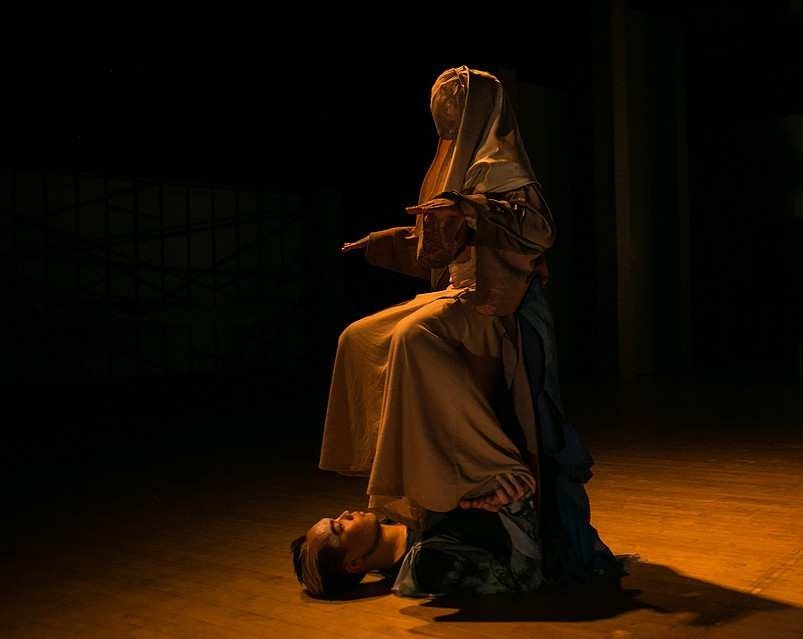
I viewed the Body as the representation of the entire human form. The body is the vessel that carries the thought faculty, brain, skin, voice and matter16 that occupies the space. The body’s positioning defined the nature of sleep. Sleep is a time of rest, when the human form takes on various sleep positions in order to acquire such rest, and thus the sleeping body became the foundation for defining this particular role. I decided that the sleep body would remain asleep for the entirety of the piece. Although I decided that the body was going to stay in a stationary position for most of the time, the Body is illuminated all throughout the work, thus laying visual emphasis on it. The soft lighting on the sleeping body highlighted the supine position of the body. The Body being in supine position is a deliberate choice because from my research, most people believe that sleep paralysis occurs more frequently while in that position.
The Mind
I viewed the Mind as the resultant effect of the human brain. The brain is the physical tissue, and the mind is that which creates the electromagnetic functionalities of the brain that generates thought. The mind houses the next element I refer to as the Voice. I stumbled onto the idea of the Mind as an entity that roams, using the effect of audiovisual-hallucination and images of floating, running, walking, falling, feeling of different sensations. I visualized the Mind as a human moving in a surreal environment. The Mind is the most active part of an important trio that appears in the work. The Mind moves and stays still; the mind expresses more heightened emotions than any of the other parts. While I was thinking and visualizing the role of the mind, it was hard not to think that the mind is a supernatural being and an aspect of itself. The Mind was, for me, in my visualization, bigger than life. I went back to my experiences and felt like the Mind had the power to do and undo. I would say that the Mind is the most integral part of all the experiences.
I started thinking that this role needed a dancer who was very active and very connected to his or her emotions. To reach these emotions would take a lot of processes.
The Voice
I noticed that people (human beings) have conversations with themselves. These conversations have become a necessary part of our existence. The idea that we talk and have conversations with ourselves that reach a decision is the foundation of the creation of the Voice. These internal conversations are sometimes never thought about or are completely forgotten. Such conversations became the idea for creating a scripted narrative that played in pari passu to the activity of the moving mind. I thought about making the Voice a recorded narration that plays along with the performance. But I then thought about the fact that this voice isn’t just any sound or environmental noise, but an intricate vessel to the whole. The voice is an aspect of the whole that is present, and the entire being cannot do without its constant or intermittent presence. I felt that an actual person would most effectively perform the Voice.
The masked figures
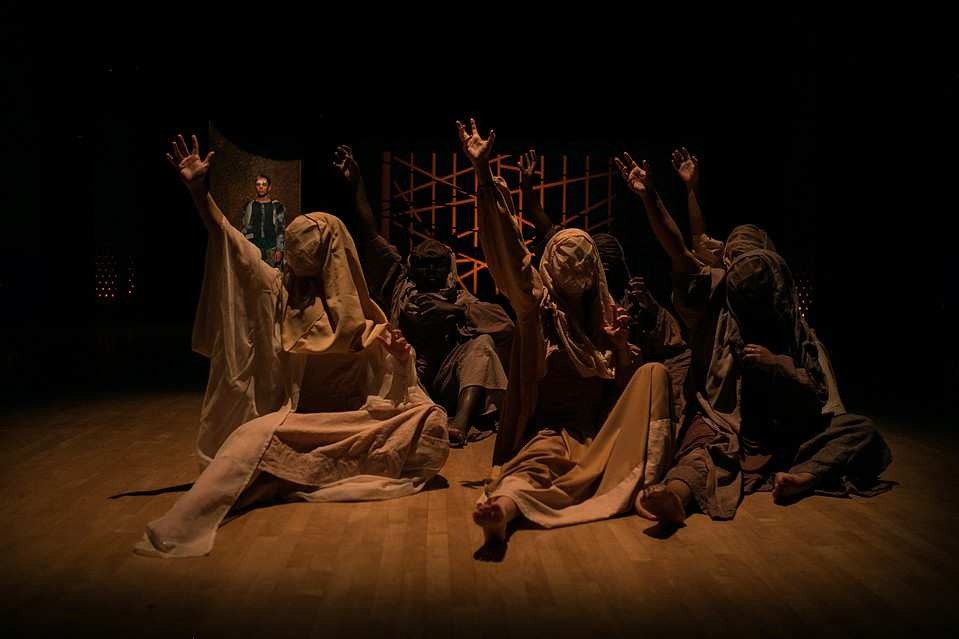
In the reality of dreaming and dreams, the engagement with other beings is apparent. The constant communication with other humans in the dream world is a huge part of my dream life, and I needed to include this aspect in the experience. I wanted to portray the encounters with these humans in my dreams as vivid and true to the experience as much as possible. In my dreams, I sense the presence of such beings. I was particularly concerned about how they form the emotional aspect of the whole experience, rather than physically identifying them as characters hence, my decision to mask the faces and cloak them. Tyler Gunther, the costume designer, did some research on how best to create these surreal creatures, and he came up with the idea of blending the colors of the costume materials with the set and the floor in a masked cloak.
Sounds: meaningful and meaningless
As I created the environment, I thought about the sounds I usually hear during an episode of sleep paralysis; I noticed that during such episodes, the distinct sounds were a vital aspect of the whole experience. When there is no sound, fear builds. When there is a sound of some sort, imaginary scenes are constructed. This surreal world therefore becomes one that is enhanced by any sound. For example, the slow hissing of the owl gives me a rather soothing and/or scary scenario. Sounds, for me, define the emotional tone of a dream event. For example, the sound of trucks moving leaves me with a sense of being close to a road.
I began to think about sound as the foundation for disseminating emotional feelings through performing soundscapes that are familiar or not to the audiences, making them feel something, but not trying to make them feel a particular emotion. The idea to make a sound-based environment became a vital tool for my creative process. I thought about sounds like moaning, screaming, crying, shuffling, singing, whistling, etc. Although most of the time such sounds wound up not being used during the actual performance, the movement sustained the emotional context of such sounds.
Movement and transfer of emotions
I was in flux as to what movement vocabulary to use. I am an African contemporary dancer, and that movement vocabulary comes easily to me. One boggling question was: why I am not finding appropriate and meaningful movement from the vocabularies I already knew? I asked Adriane Fang, my modern dance professor and a member of my thesis committee, and she encouraged me to try and “find” my material. The traditional, modern, and social dance movements I was familiar with and trying to incorporate had already been made and used. Hence, they already existed and thus were inappropriate for my current process. I found that the answer was compelling, and I went on about inventing my material.
A movement is like a language; one has to find the appropriate speech to convey any particular message. I had to make a choice to use a more unscripted vocabulary or not to make use of any dance style in particular but the one that made sense for the moment. Discovering my original material was easier than I thought it would be. It was all about me moving to the ideas at hand and using them to develop my primary voice.
Finding my material
As I went into the studio, after having failed from using known movement vocabularies for my creation, I found a beginning. I went into the studio, alone, in a beautifully constructed studio we call the Choreography Studio in the Clarice Smith Performing Arts Center at the University of Maryland. This studio always inspired me. The cause of the inspiration is still unknown to me. I felt it was probably the color or the beautiful glass squares at the top of the building that allow in sunlight. I sat in the middle of space in silence, looking into the mirror. I saw nothing but myself sitting on the gray Marley dance floor, staring into space. I was visualizing the feeling of an out-of-body experience, playing with the thought of floating and walking while not seeing the ground, but most of all, engaging with how memory floats away zooming into infinity. I stood up, closed my eyes, and started floating.
The next rehearsal, which was days later, Jonathan walked in, and I went to him right away, talking about the ideas I had come up with during his absence and we started dancing. Using some fundamentals from Contact Improvisation, I ended up holding both of his ankles from behind. I told him to stay still as I tried to pull him so that he would glide along the floor. He stopped me and asked if I was attempting to draw him; I replied, yes, and he said, “we might need socks for that.” He went quickly to get his socks from the little hallway demarcating the studio from the main hall. He put on his socks, and as I pulled him, we found it, our first floating movement. This exploration was the opening-of-the-door-moment, and I knew that I was onto something at this point. Leaving the studio, I felt fulfilled and thrilled.
Movement choices
Although I went in search for original movements, I kept the foundation of my dance training in this creation. My training, which includes African dance and contemporary dance, were the base for these explorations.
Traditional African movements are used to portray the ritualistic nature of exorcism found in my traditional culture. Using the cyclical runs of the Ekpo and Abang masquerades of Cross Rivers state in Nigeria I wanted to create a feeling that would, with the cloaks, generate twirling wind motions for the audience. In the running segments, the masked dancers continually engaged their torso and undulated as they ran, embodying the watery, wavy nature of the Ekombi/Abang dances. The choice of using the dance styles like B-boying and movements found in yoga and other such practices were deliberate, and they played to the strength of the performers to create meaning as they performed.
In conclusion, the dancers needed to find ways to relate to the tasks so they could communicate their understanding of the movement in their movement voices through improvisation. Improvisation mixed with expressive intentions was a large part of my process, and at the end, I believe that my dancers found a means to use the constructed movements for their own interpretations.
Chapter 4: Design Elements
In this section, I will give a general overview of the space and how it inspired my vision. Also, I will include notes from my collaborators.
The house
The Dance Theater at the Clarice Smith Performing Art Center.
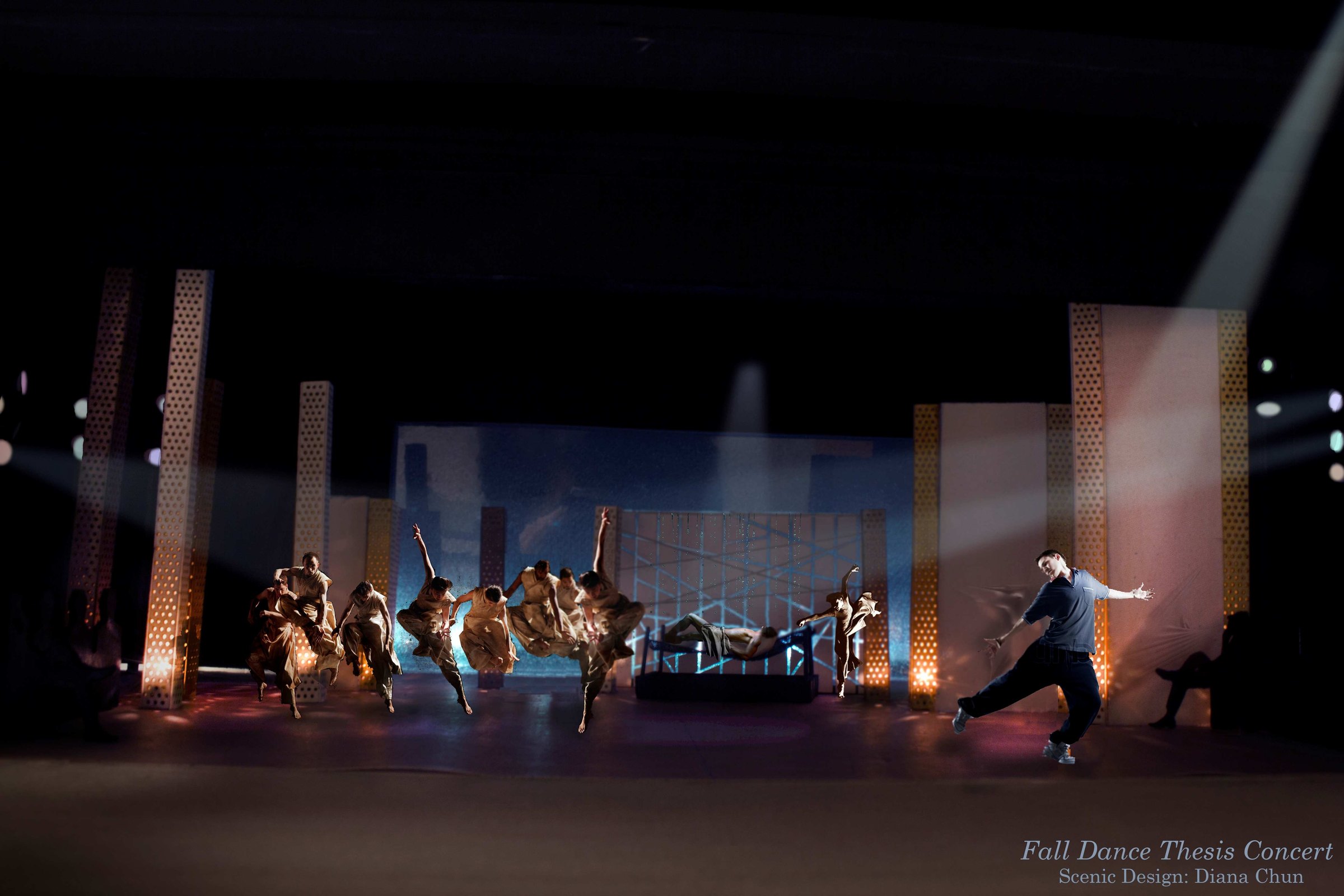
I first saw this space in the fall of 2013, when I arrived from Nigeria. I was captivated by the industrial look of the venue. This venue is multipurpose, used for dance technique classes and dance performances. I was very curious about the space, particularly in the way it had so many nooks and crannies and hidden outlets. I knew I had an affinity for weird and fascinating spaces, and this was a good example of one. From the onset, I knew the concept of “Nyam chiem” was mainly about aspects of sleep episode and therefore, a bedroom needed to be part of the set. Diana Chun, my set designer, and I had a conversation about sleep paralysis. My first thought in our conversation was about how the feeling of my room changes and how it becomes a larger than life visual representation. An example of this would be a small picture frame becoming larger than life, and all figures in the picture come to life. We began by using the physical settings of a bedroom, my bedroom, as our sketchpad. In my room, I had a queen size bed, a lamp stand and a lamp, one picture frame and picture, and the sharp angles of the four corners of the bedroom. From this description, we derived the hammock which represented the queen size bed, the 8 by 5 feet painting represented the picture and frame, the columns represented the sharp edges of the corner of the room, and then the dripping water, represented my lonely nights of tears.
Design elements from the stable of the designers
In order to capture the works of the designers, I asked them to provide their research materials and short process write-ups, and reflection of the entire process for this paper. This includes how they actualized the design of the piece. I wanted this to be as organic as possible and to be able to show their collaborations with me throughout the process.
I find collaboration to be more of a one-hand-washes-the-other kind of process. In my opinion, without the full commitment of the collaborator, and without the full trusting of the collaborating party, to go headlong into the creative design process, it won’t be a successful collaboration, but rather a dictatorship on my part as the artistic director.
Below are the collaborators’ process notes and images, and how they articulated their works through artistic and theoretic ventures, in achieving the work. 1. Set design by Diana Chun
Approaching sleep paralysis as a journey of the mind that was the focus through the design process. Choreographer Emoghene created the concept of mind, body and narrating voice, each played by different performers. The audience followed the piece as each element was lost, discovered, and chased through flashes of events. My vision was to create a maze for the Mind and the spirits, while the body slept still at center stage. My first step was to create dynamic pockets of empty space among the forest of one-foot by one-foot columns. The columns were laid around the outer range of the stage to create clear boundaries of space that is outside and inside. Column continued near the audience seating so the viewer could feel as if they were inside the mind, amongst the performance.
The visual representation of the set landed itself to an abstract form, moving fluidly between our everyday world and the world of the Mind. The series of narrow box columns intrigued me while thinking of the illusion that would be created by their interchanging presence and absence.
Multiple columns provided an interesting shadow and light play. We used the shadow and light idea to transform the space from a calm sleeping brain to a brain filled with electrifying neurons. The faces of each column was dotted with holes that emitted light. The wall that visually framed the sleeping body adopted the shadow and light play concept as well. The cracked wall pattern was drawn from the visualization of the spider web-like brain neurons. The web of pipe hovering over the sleeping body held water that was released throughout the piece. Slow water dripping onto the sleeping body represented the mourning that the body went through during the experience.
The color pallet was drawn from human skin color: from an off white to an earthy brown. This color scheme was continued from the set to the costume, which unified the world that we created. Working with choreographer Sinclair Emoghene was enriching. His concept was focused and his process was exciting because he allowed the team to become artist. The piece was beautifully imagined but also powerful as it was rooted from a most authentic experience. Designing “Nyam chiem” was a great journey with him and I can’t wait to see his next piece (Chun 2015).
Fig 1 – 9 below visually captures the entire set design process from conceptualization to actualization: See below for images http://dianachundesigns.com.
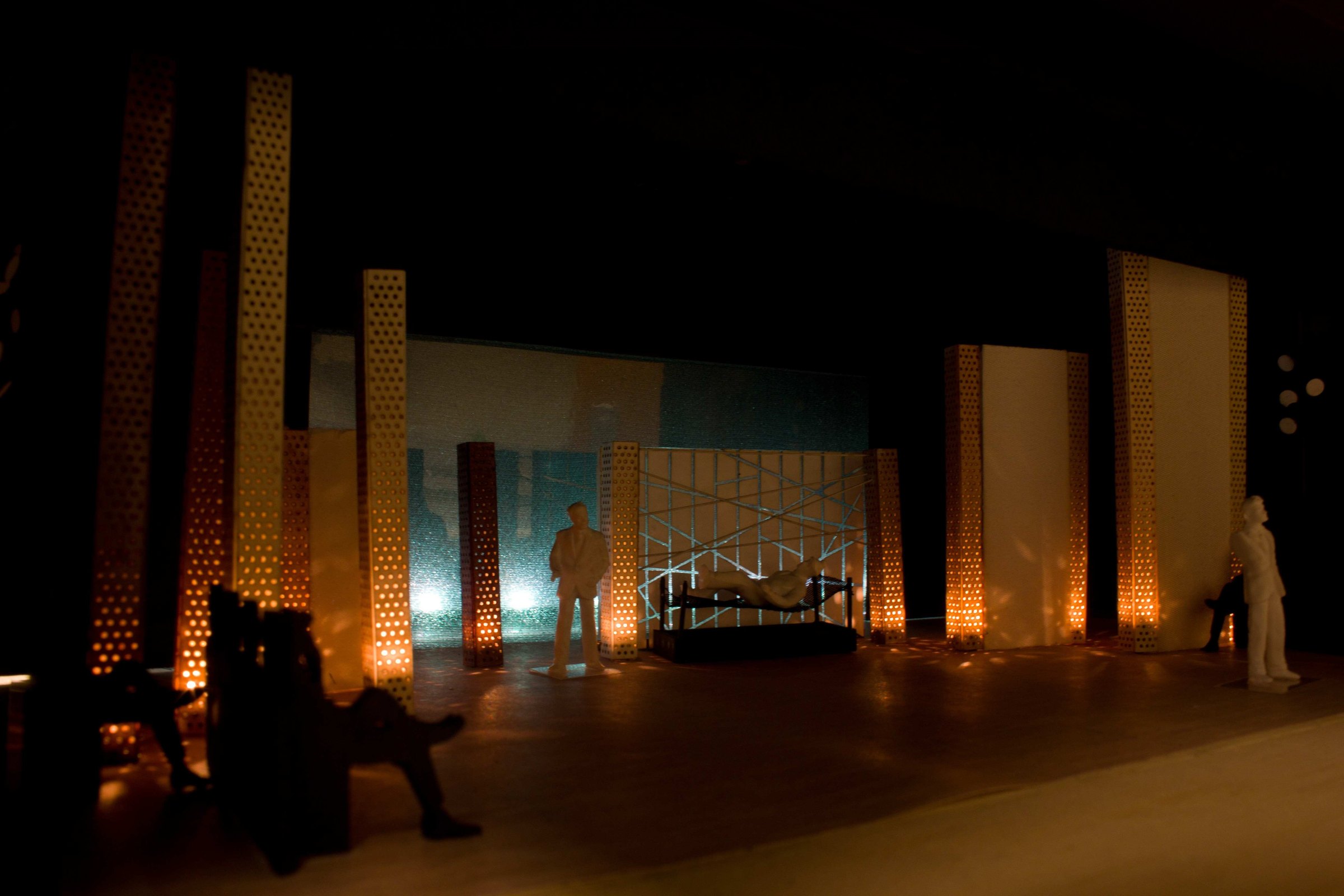
Set design mounting to performance
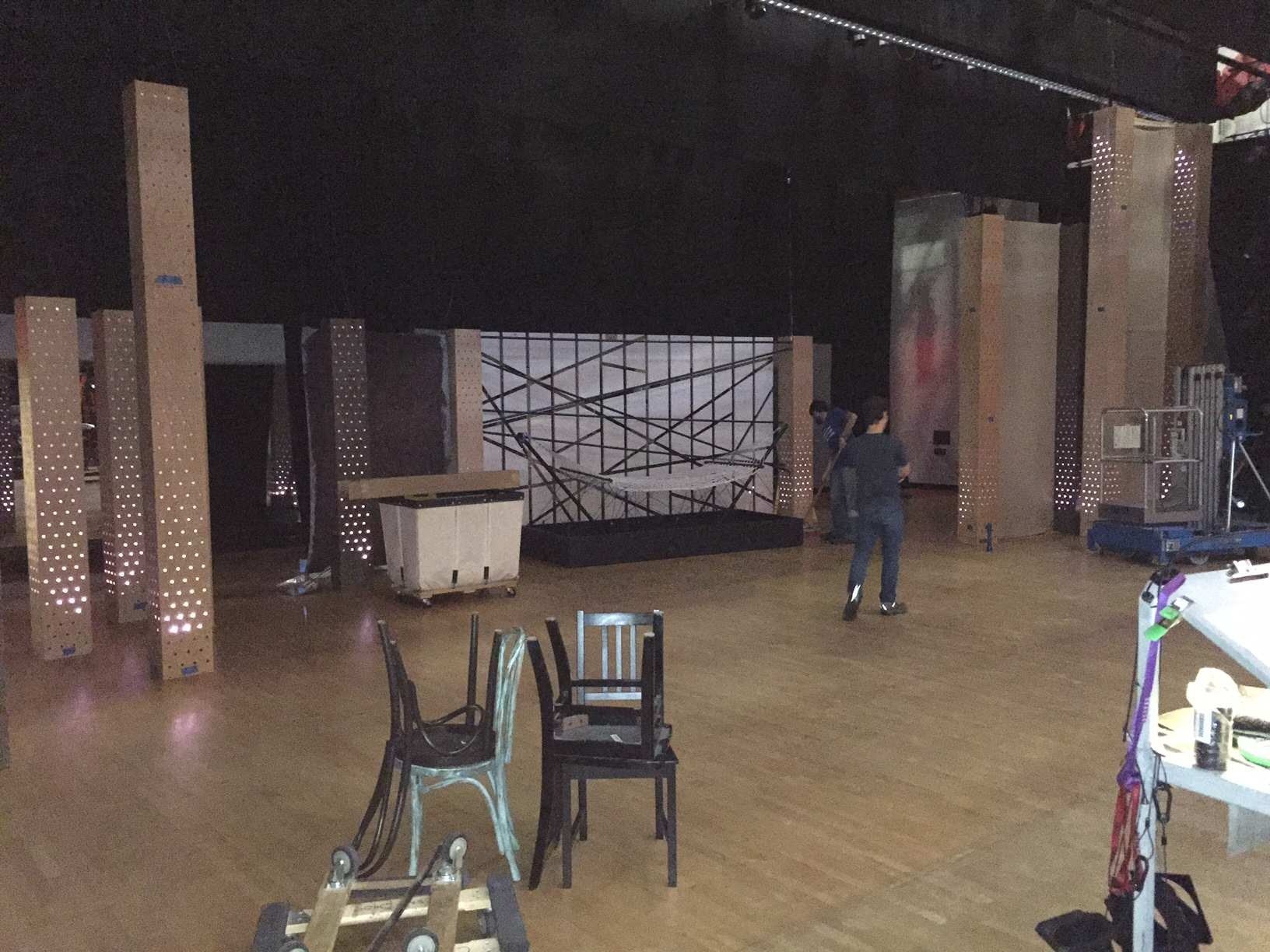
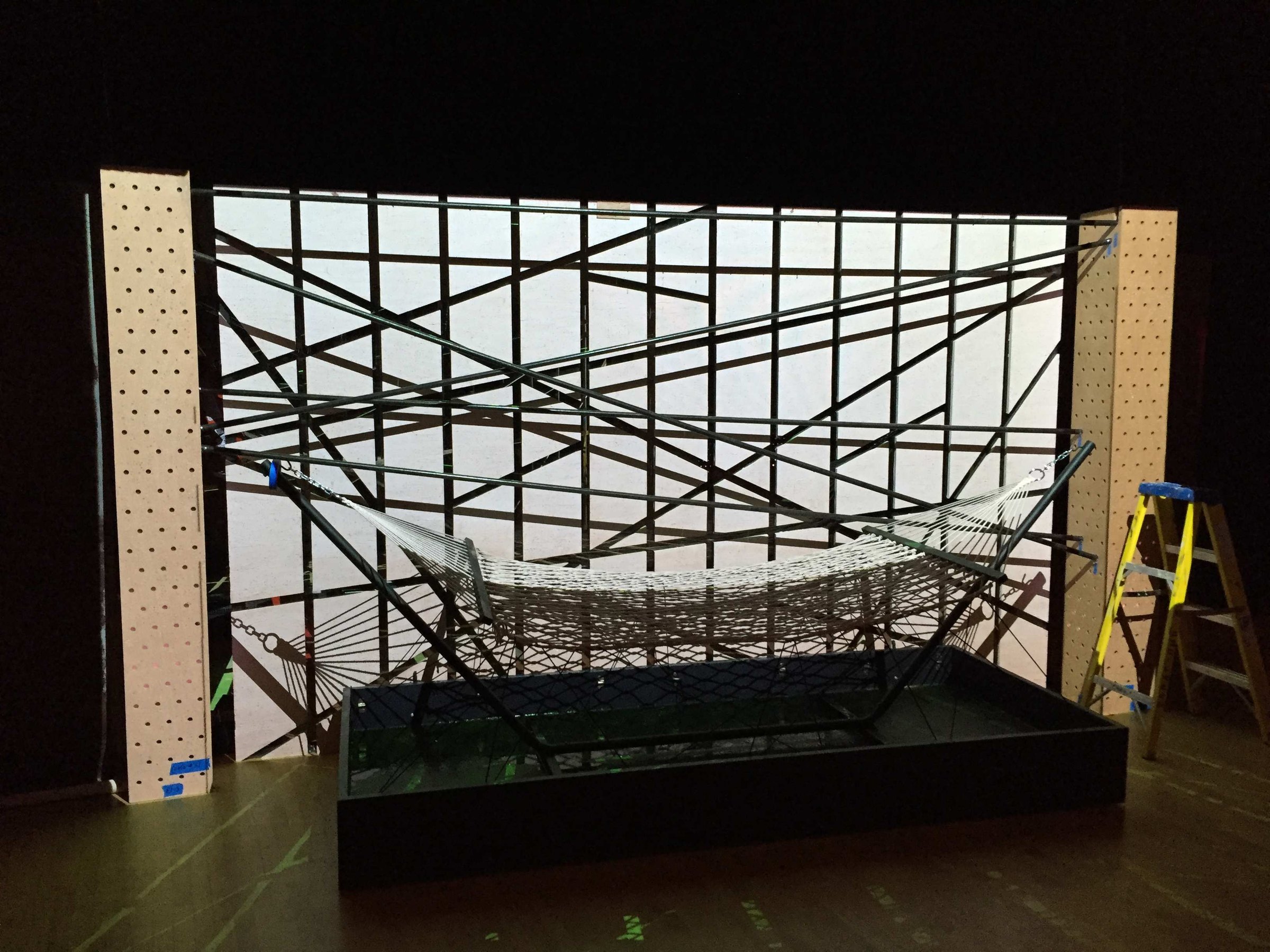
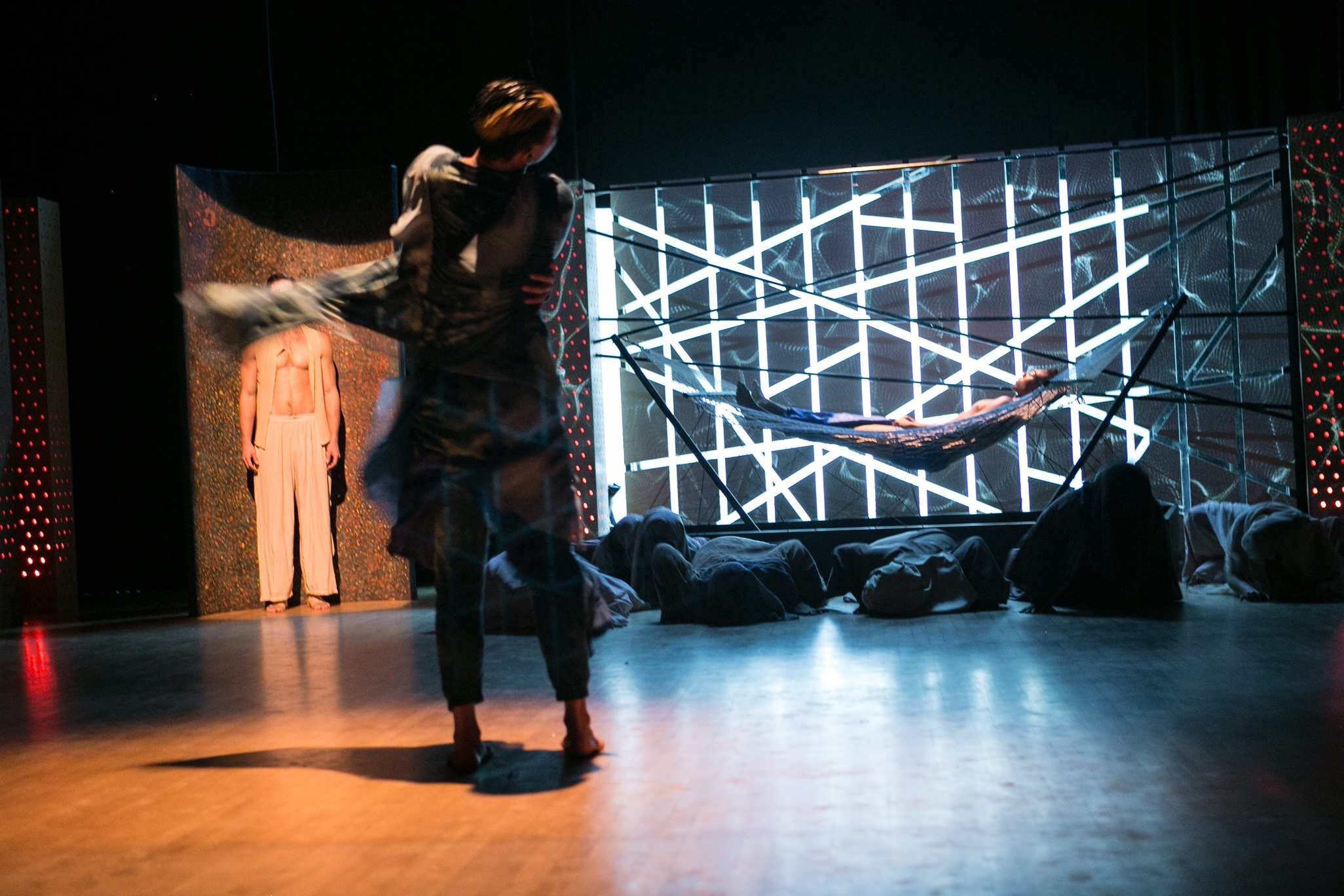
2. Sound design by Zak Engel
Lately, my theatrical listening has revolved around music that feels cinematic. I find myself pulled toward rhythmic ideas and melodic content that could-to-my-ear-be paired with film. Working on “Nyam chiem” gave me an opportunity to create music in this “sweetspot.”
Sinclair’s references ranged from tribal percussions, to full orchestra action sequences. After discussing the arc and different movements of the full performance with Sinclair, I categorized my musical content by how I imagine dancers interacting with the compositions. Certain tracks needed to be powerful and authentically ethnic, while remaining free enough to allow dancers to follow both the natural rhythm of the movement and the tempo of the music. Other tracks called for extreme ambience, almost living in the world of sound-design.
Some of my favorite music in “Nyam chiem” involved a mix of ethnic and contemporary orchestral instrumentation. Track 5 for example, begins with a solo cello, builds to a larger string ensemble with ambient violin swells and tribal drum hits, and comes to a close with a small hand-percussion section. Mixing these instrument families was an unplanned idea that created a memorable and unsettling ensemble. The emotional effect of combining something in the world of a Paul Thomas Anderson film with what I can vaguely describe as tribal and ritualistic drumming, was extremely interesting and created a timbre I hadn’t explored before “Nyam chiem”.
Due to the process and timing of the project, layering solo performances created much of the ethnic and percussion material. The challenge then became creating the ambience and “live” feeling of an ensemble. Reverb helped a lot with this. Bouncing out a mix with heavy reverb of slappy delay on drums and then layering it subtly underneath the dry files helped add depth and the feeling of human imperfection. I also included atmospheric sound- design in some of the tracks; layering the sound of a large crackling fire or distant breathing helped put the instruments in a space already alive with arrhythmic sounds.
My biggest concern-which is always prevalent when composing for a live medium-was creating music that felt elastic enough to cushion tiny variations between performances.
Sinclair’s desire for sonic ambience helped create respites from the intense orchestral and rhythmic pieces. Track 7 is almost completely sound-design. Driven largely by a drone reminiscent of wind blowing through a cave or hallway, the piece is peppered with electronic percussion and a swelling metallic pad. Composing for dancers was exciting for me. I loved creating music to motivate movement. Sinclair’ musical references helped illustrate the tension and energy the performance needed. It made my job easier and led to a beautiful product (Engel 2015). www.zakengel.com
3. Costume design by Tyler Gunther
I personally have never experienced sleep paralysis, but I was very intrigued by Sinclair’s dance thesis. I enjoyed the mysteriousness of the subject matter and the complexity of an event that was only occurring within an individual’s mind. From very early on my goal was to create a set of costumes for the ensemble that was specific to Sinclair’s world, without referencing a time period or specific mood. I wanted the audience to be intrigued by what they were witnessing, without giving them all the answers. Near the beginning of the design process I spoke with Diana Chun, the scenic designer, and was inspired by her interest in using a variety of flesh tones within her scenic elements. We discussed that it could be very beneficial for our two color worlds to be closely linked to create a greater visual unity for the dance piece. After this discussion I began to think of the fabric as more of layer of skin interacting with the dancers’ bodies, rather than a piece of clothing. I loved thinking of the way the costumes could wrap, twist, hang, envelop and expose each of the ensemble members. I also spoke to Sinclair about the use of mask. With his initial inspiration research I immediately gravitated to an image of dancers in full-face masks. The rest of their body was normal, but because their faces were obscure it completely changes their figure into a new creature. Sinclair and I were both interested in exploring this with the costume design of his piece. Once again I approached this elements as if the mask fabric was skin I imagined it being stretched over each of the dancer’s face, removing any facial features.
As the costume design developed and I saw more of the choreography I was able to create a set of looks for the ensemble. Each dancer would have pants or skirt, a top, a cloak that covered their arms and reached their ankles, a hood and a mask. Each of these garments would be individually dyed to be similar to the dancer’s skin tone. As costume fittings began I began to get nervous about the quantity of fabric I was expecting each of the dancers to work with. However, with each costume fitting every dancer was more than wiling to work with the costume. I was very appreciative of everyone’s willingness to collaborate and try something new.
While designing the ensemble’s costume, Sinclair and I were also developing Jonathan Hsu’s “Mind” costume. His costume did not have to follow any of the rules that we had created for the ensemble. The fluidity of the Mind’s movement and character led me to look at water as point of costume design inspiration. I used a large variety of blues and blue-green within his costume to create a strong contrast with flesh tones of the ensemble. His costume also utilized fabric layering in different way. Both his arms and legs were intertwined with layers of different fabrics creating a swirling effect when he moved, while also creating an interesting visual sculpture when he was stationary. Lastly, Sinclair encouraged the use of makeup on Jonathan to create a dynamic impact with his character and further separate him from the rest of the world. I decided to color block his face in nontraditional ways to add further air of mystery to his character.
In conclusion, I was very grateful to have the chance to work Sinclair on his dance thesis. It was such a unique design opportunity to create this new, exciting world. These costumes were unlike anything else I have ever designed that I found that immensely refreshing as an artist. Also, Sinclair always had a great amount of trust in his team of designers and that empowered each of us to make bold, confident decision that combined to create a very exciting experience (Gunther 2015).
Fig. 1 – 9 below visually captures the entire costume design process from conceptualization to actualization. See below for images:
www.tylergunther.com.
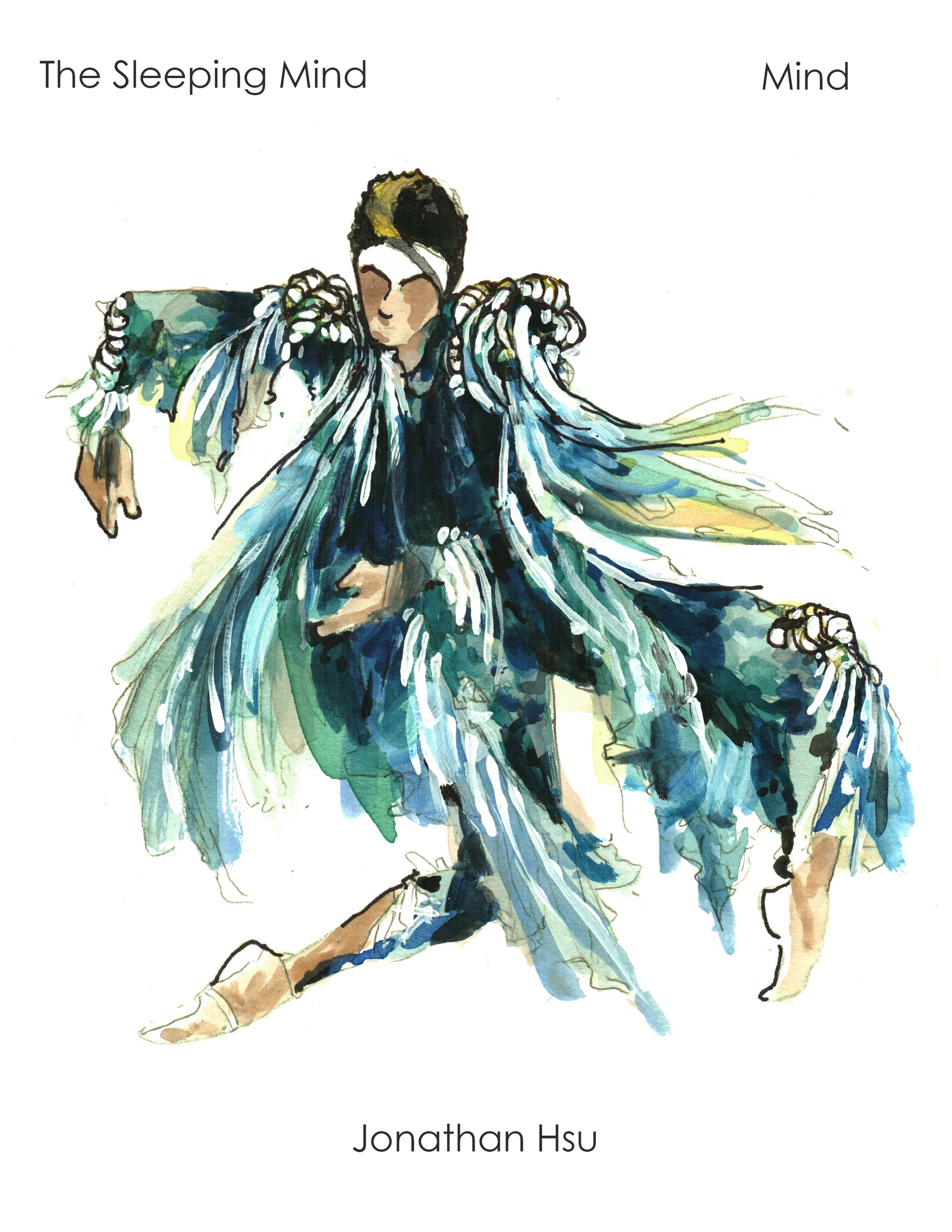
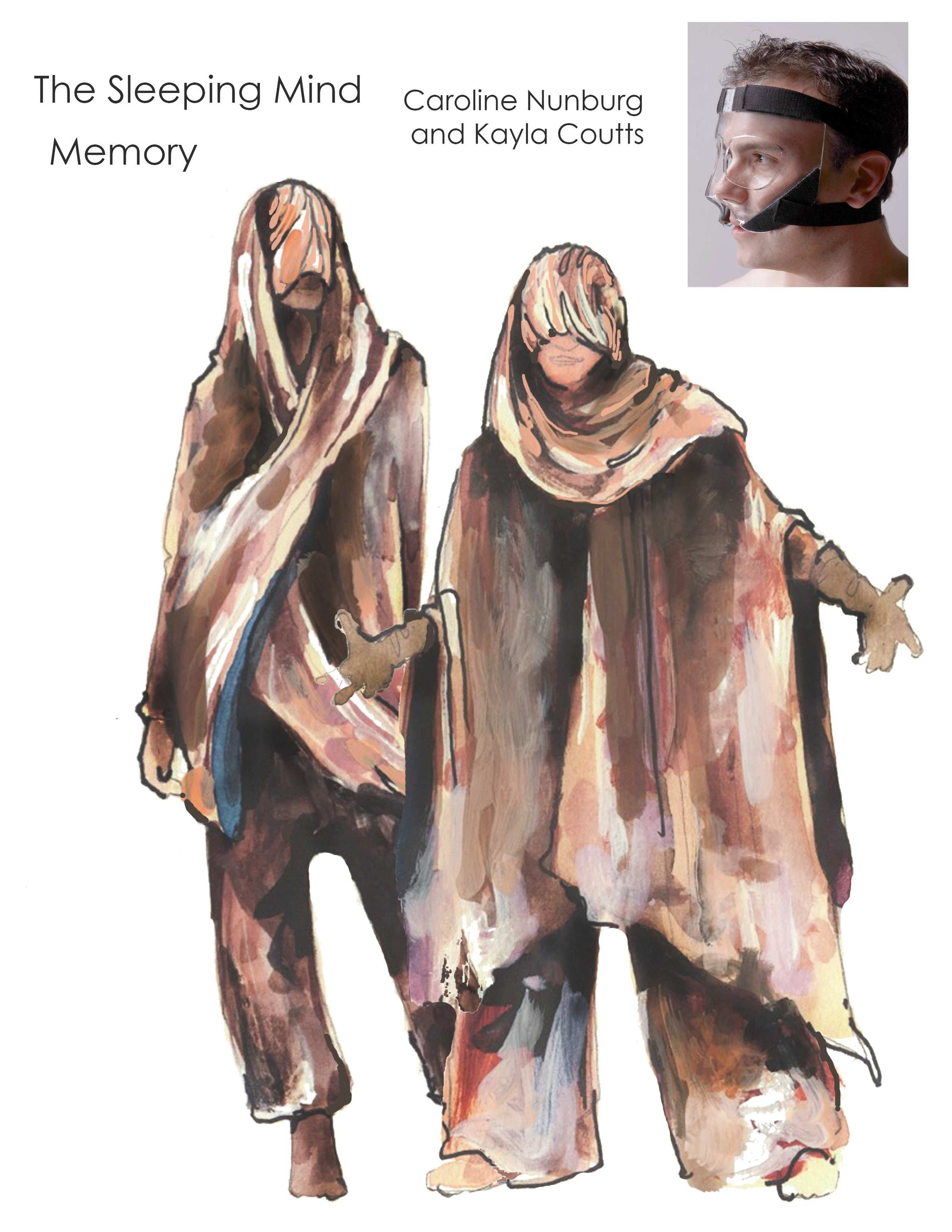
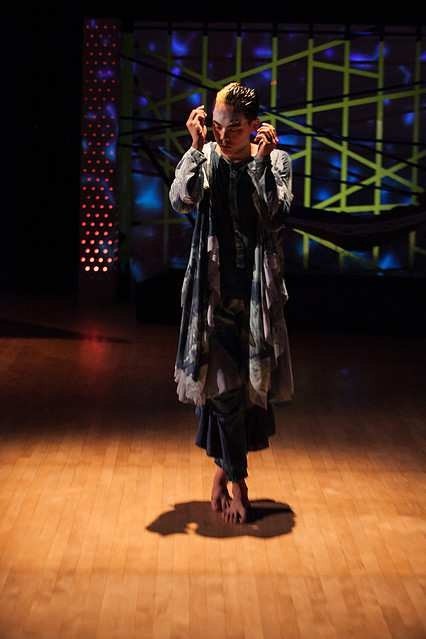
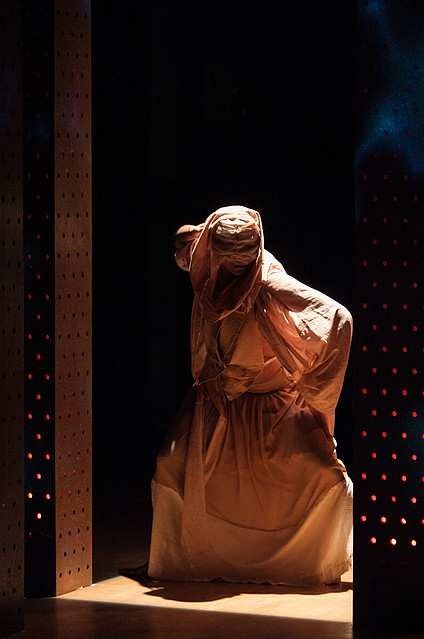
4 Light design by Connor Dreibelbis Lighting research materials:
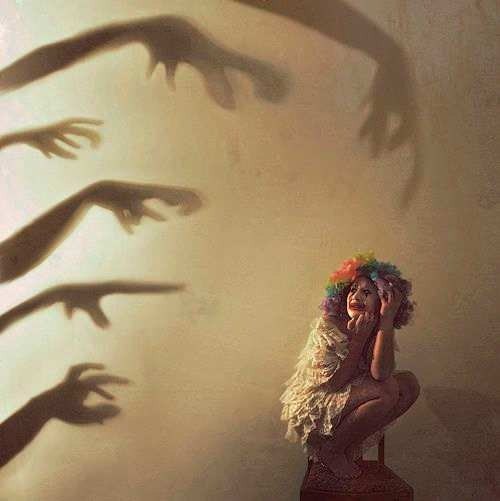
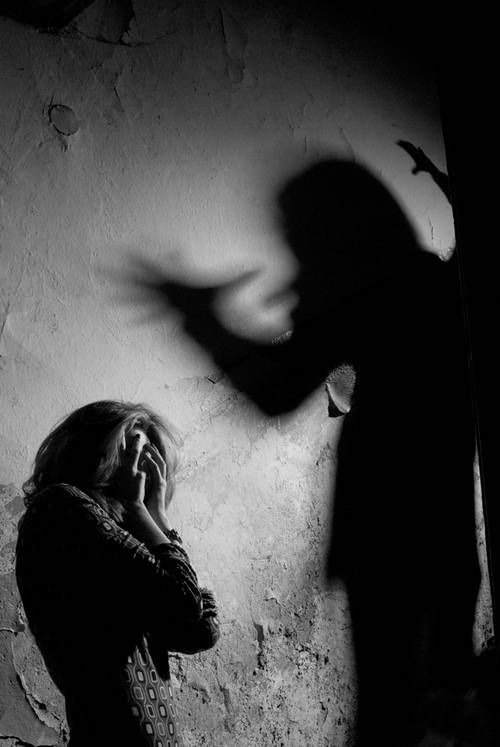
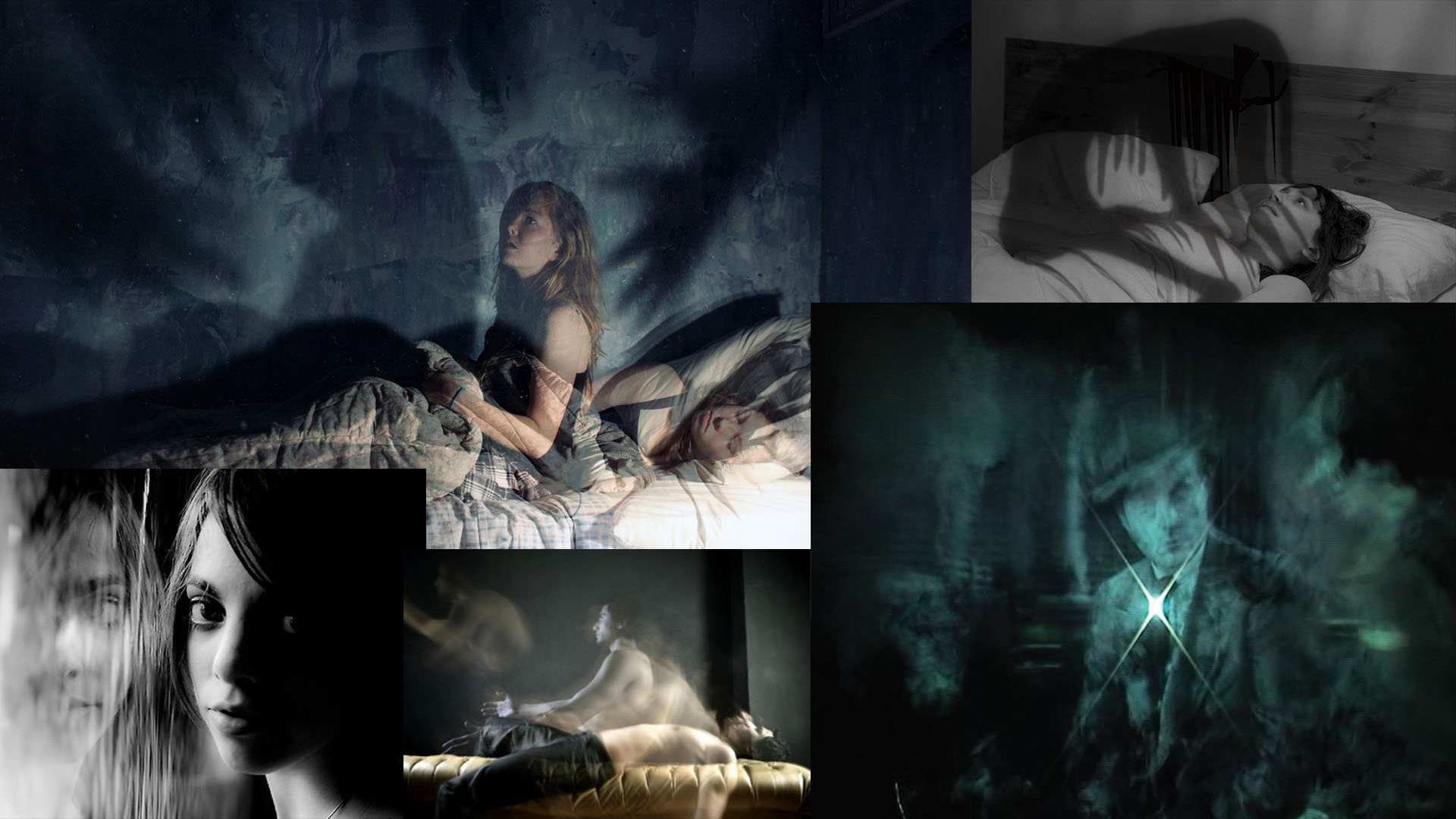
5 Projection design by Ian McClain and Sinclair Emoghene My curiosity about the surreal and what it would look like if a world were created using projection design, started this creative process. I was curious as to what it would be if we made use of new media design, projection mapping, haze, water and other types of surface.
The world of the surreal and how to achieve it was key, and given the fact that my skill in new media design and the technical components involved was limited, I sought out the assistance of Jared Mezzocchi, a Professor in the School of Theater, Dance, and Performance Studies. I first took a projection design class, and then two different independent studies with him. He recommended the expertise of undergraduate projection design student, Ian McClain, to assist me. Before Ian joined me, I designed a snippet of the idea for the presentation of the thesis proposal, using Isadora software and pre-recorded videos to create a projection mapping on the back of my head. The video contents were a collection from online downloaded web based materials. This videos projection preview was a clear pathway for Ian. As I did with other designers and their collaborative components and contributions, I allowed the freedom for Ian to take our discussions as the foundation for own creativity and artistry. I was pleasantly surprised that Ian came back with the ideas in very innovative ways, exploring the concept of using shadows, wall murals, and mapping of fire, fog and smoke. He also went into working with the choreography, the sound designer, and the light designer to come up with more interactive media.
Projection design research images:
Projection design in performance
The design components
In the end, I was pleased by the nature of the design elements. Not very often does one find oneself in a production where the design elements find life in themselves, and then come together as supporting elements that produce a whole. My overarching aim was to have a world where the performer was aided by the world in which he finds himself. There was nothing in the entire design elements that was thrown in without meaning. Like all the daily rehearsals with the dancers creating the movements, the designers were engaged throughout the process, creating until we hit the final product.
Chapter 5: Analysis of final performance
Overview of performance
The performance opened with an audio narrative performance by my friend and collaborator, Nadav Heyman, who came from Los Angeles to perform the role of the Voice. I found Nadav in an online dance video “Helena” on Vimeo, where he was performing movements along with narration, similar to what I had in mind for “Nyam chiem.” So, I contacted him to write the script and portray the character of the Voice. In this section, I will feed off of the unique narrative technique that I employed throughout as I report. The performance section will be broken down into different segments, as broken down by the narration of One.17
Opening: (Darkness)
(Voice streams in)
The Body appears at center stage, doing an expressive dance that engages the torso, using minimal space area of movement and the lighting lit from the top of the dancer, to create eerie silhouettes as the Voice renders his first lines:
What does one do when one can do anything one wants? Usually, one does nothing. One sits and thinks about all the extraordinary things one can do. More often than not, one capable of extraordinariness settles for little beyond mundanehood. On the other hand, what does one do when one is capable of doing very little? Usually, one tries very hard to defy the odds, to be the exception, to be the water- filled cactus in an arid desert from which the world will drink and from which the world will learn and thank. Unfortunately, usually, one fails.
Space is engulfed by sound, as the faint light comes on the Body, who now sleeps in a hammock. The projection design builds on the set, and we see the departure of the Mind from the Body in a projected out-of-body experience, creating a vivid water wave sensation, welcoming the audience into the surreal world of the human mind.
In the next section, the Voice moves upstage, and he is against the backdrop of a visual painting that signifies the unusually large mural in the room of the sleeping body, an idea that fed off of the visual hallucination properties found in the experience of sleep paralysis.
Three masked meta-humans (dancers) appear on the left side of the stage, and the Mind is seen down stage right. The appearance of the Mind at this point is the first time we have a sense of him, and we see him going through an emotional experience.
Either way, one ends up average. One joins the march of the many where one becomes uniform, a soldier and another marching soldier in uniform. It’s easy to picture the camera zooming out from the marching soldier to reveal a whole line of soldiers, and the line becomes an army and the army a nation and the world. The marching soldier gradually becomes a moving dot and then a speck and the swiftly blurs together with all the other dots into a cohesive haze of blackness. Suddenly it doesn’t matter if one was capable or incapable of extraordinariness, because a moving dot is ordinary. It’s extraordinarily mundane.
As the text begins, the Mind is in a rotational movement that ends up with him hovering on top of the three masked figures.
Once one has made one’s way through the aforementioned introspection, one appears at a fork with four distinct ends. The first end is just that: an end. It is the choice to shoot (or shoot) or jump or swallow or cut vertically, and end it blissfully. Unfortunately, this choice is mundane. The second end is a much longer one. It is the choice to embrace the hollowness and turn to sniffing, snorting, smoking, shooting or swallowing, any of the above actions to fill the lungs and veins with something tangible. It is the choice to search aimlessly and belatedly for something concrete. Choosing end number two means living through incessant introspection and consists of frequently failed trips down end number one. Fortunately, it cannot be classified as mundane. End number two is a respectable choice.
(Percussive rhythm builds in the distance)
In this section, the Mind experiences static and unbearable immobility, thus, the offshoot of his emotions through a choreographed depiction of masked figures approaching in and out of the Mind’s thoughts from all angles possible. After this experience, the Mind is left alone feeling the emotions and trying to curtail and cope with this new and frightening environment of sleep paralysis. Emotions at this point are raw. Tears and crying are some of the activities the Mind underwent as he surged through such a perplexing world. I used the dripping of water from the constructed pipe on the frame of the cracked wall to signify the enormous amount of tears the Mind goes through. The decision to use such raw emotion is deliberate, and the emphasis is on the emotions and how the Mind finds his process of dealing with the situation.
The third end is a good one. It’s very, very good, yet it is never chosen. The third end is the choice to ignore the introspection all together and live in a so-called “zoomed in world” – a world where the marching soldier’s sweat and wince and limbs are visible. It allows one, for example, to examine the segments of a centipede and smile at its simplicity. Two legs per segment. One on each side. An odd number of segments yielding an even number of legs. Symmetry. Proportion. Evenness.
(Traditional tribal sounds of exorcism and masquerading approaching in the distance. Ekpo Calabar and Akoto Badagry masquerade songs engulf the space.)
The Mind seeks freedom. The mind goes into a mode of reminiscence. Using African ritual songs, movements and dance to dealing with such uncontrollable circumstances. In the performance of the piece, at this point, masked figures run in circular motions in frenzied patterns of exorcism and ritualistic choreography. The Mind is in the middle of this and is taking in all the actions around him. In a frenzied way, the Mind is satisfied by the motions and emotions, and he drops into a fall, and he is much more alive.
The Mind engages with individual segments of his feelings, and he does this by doing a trio dance with the masked figures, a style I derived from the Tiv Swange and Kwaghir puppet theater of Nigeria. The trio dance led into a frenzied solo performance signifying an acceptance of the answers gotten from the preceding ritual scene. This solo dance leads the mind to a nostalgic remembrance of a friend and a childhood game time. This part is a definite dream sequence, and it’s performed in a duet of the Mind and one masked figure. The dance style used to portray this is contemporary and modern American contemporary dance. This technique is employed to give the performers a range of comfort to express and reach far into their emotions and also add to the depth of the topic.
(While the duet went on, the voice continues his rendition of the “One” narration):
Unfortunately, this choice results in sporadic spurts of introspection. For this precise reason, the choice is never made. End number three is an illusion. No ones mind can successfully fight off the introspections because as soon as the introspections are gone, an unbearable internal cavity is formed and begs for a filling. And no one who can afford a filling goes without. Regrettably, the third end is impossibility.
After the duet, the Mind is seen in visual murals on the set through projection design, a visual representation of the frightened senses of the Mind in sleep paralysis. I use this to represent his state of hallucination. The Mind begins to move his arms and flick his wrists, to indicate resistance, acceptance, fight, struggle, and awareness. The Body moves; this is the only time in the entire piece that the body physically moves, and we see a reaction from him as the Mind goes into a duet with the Voice.
Plausibly, the fourth end must provide some form of closure, and it does. The fourth end is a fucking genius. It’s the offspring of Einstein and Gandhi and Hitler, a three- way offspring because it’s so fucking tremendous. When one sees the fourth end one will be overwhelmed with chills and may have several bodily reactions including but not limited to; uncontrollable tears, erection, immediate and likely multiple orgasms, twitches, hallucinations, a startling rush of adrenaline…and such. One will be overwhelmed with a sense of ecstasy and euphoria and elation and will have a sudden urge to think of other synonyms for this magnificent feeling. One will search for a centipede to examine and spend all day in a frenzy to find one, and at last find one, and count the segments and smile at the simplicity. One will know that one will never feel like one feels at the moment, this very moment. One will smile widely and aggravate one’s jaw muscles and enjoy the subtle but very tangible pain. One will laugh at the pain because the pain is caused by the laughter, which is irony at its finest. One will continue this trance for quite some time, what will seem like an eternity.
After quite some time, one will calm oneself just enough to look at the fourth end, to confirm its existence, one will see nothingness where the fourth end used to be. One will frantically attempt to trace ones steps back to the moment where the fourth end was first seen. One will begin to get more frantic and become panicked as the step begins to blur in ones mind into a cohesive blackness. One will feel the greatest loss of ones life, a loss that can be parallel to no other.
One will feel a bottomless internal cavity begin to form. One will soon choose end number one because mundanehood is all that seems tangible (Heyman 2015)
The Mind goes into a state of acceptance and repose as he meanders his way through the little-nuanced movements of the masked figures.
The end of the piece uses innovative movements like gliding and pulling a dancer along the floor, signifying a floating motion that makes the dancers into oblivion. The Mind is being tossed left and right by masked figures, a play of yes and no. In the end, the Mind accepts the situation and calls sleep paralysis a normalcy and a part of his incredible existence here on earth.
Final Cast List
Jonathan Hsu
Nadav Heyman
Christopher Law
Tamar Gasko
Mustapha Braimah
Allen Chunhui Xing
Rose Xinran
Theophilus Nimpson
Sinclair Ogaga Emoghene
Anwar Addae
Stage Manager
Sophia Lewis Adam
Chapter 6: Conclusion/Recommendations/future of “Nyam chiem”
Future of “Nyam chiem”
“Nyam chiem” has quickly morphed into a major subject of my artistic process. I have started developing smaller projects, some of which are currently being executed, and some of which I plan for years in the future. Part of the smaller projects in the immediate includes: “Rooted on a Moving Spot” to premier on April 11th 2016, location – it was in an interesting place I recall – metal shop, a collaborative project with visual artist Beki Basch from the Art Department at University of Maryland, College Park and also a Baltimore artist. “Rooted on a Moving Spot” stems from the confined space idea and surreality of “Nyam chiem.” The longer-term works, on the other hand, includes a film series I plan on creating about sleep paralysis in dance, the restaging of “Nyam chiem” itself, and other works about sexuality, gender, and religious beliefs.
Conclusion
“Nyam chiem” is a merger between two worlds and two different perspectives on the modern choreographic processes, including my African trado-modern18 experiences and beliefs, as well as my Western training and influences.
In Nigeria, dance making is partly a re-creation of already existing movement dialogues and movement patterns, as well as the use of current issues in the celebration and reenacting of any current activity. Dance making is devised and community-based and naturally choreographed into the lifestyle of the people.
In my quest for understanding my present challenge as an African dance choreographer, I find that I’m at the introductory phase of something new. This project was my biggest opportunity to begin exploring this new phase. I threw out all my previous inclinations and sorted out ways to first adapt to my new environment and then through that, to find my artistic voice. Writing this work and observing my journey and process continually fascinated me. I think about how I found ways to create the work, still retaining my sense of home and finding a stronger way to articulate my process in the most succinct and clear ways possible.
Reading most of the research materials I found for this work, and taking classes every day for the past two and a half years, did open my eyes to a lot of information. The information garnered was juxtaposed with my already overflowing pool of knowledge of my home and practices of my people. I feel that the experience so far has been productive and fulfilling.
My research into sleep paralysis was theoretical, experiential and self-reflexive, and theatrical at every step. I became aware of my body, my history, my environment, my experiences, and the dreams I have for my future. “Nyam chiem” was both a life lesson learned and an experience lived.
With this work on sleep paralysis, which I find to be an innovative area in modern day dance practices, research and choreography, I tried to reconcile the marriage of practice as research and that of performance as a daily practice. The scholarly research concerning sleep paralysis, which I found in psychology texts, helped this research as a supporting base, and as a lens through which the phenomenon can be viewed using movement as the canon for the main exploration, discussion, execution, and presentation.
Collaborations are sometimes challenging between the choreographic artist and other collaborative artists; through this process, I found that to be a valuable process to go through as a dance maker. The activities of creating choreographed and improvised movements into a performance, the mapping of projected visual effects and the use of high-tech stagecraft were new ways of knowing. This exposure gave me an understanding of cultural, social, collaborative, choreographic tools, movement language/vocabulary, technological skills, theoretical analysis skills, management, budgeting, communication, textual, and contextual applications of learned materials for experiencing, and living the life of a modern day dance artist.
In conclusion, “Nyam chiem” (Night-Mare) depicts the human mind as the metaphysical interface between surreal and the physical, identifying sleep paralysis an ongoing and unending phenomenon. The fact that various people are experiencing sleep paralysis keeps the concept alive.
Bibliography
- Adler, Shelley R. Sleep Paralysis; Night-mare, Nocebos, and the Mind-Body Connection. New Brunswick, New Jersey, and London: Rutgers Unversity Press, 2011.
- —. Sleep Paralysis; Night-mares, Necebos, and the Mind-Body Connection. New Brunswick, New Jersey, and London: Rutgers University Press, 2011.
- Baland Jalal, Devon E. Hinton. "Rates and Characteristics of Sleep Paralysis in the General Population of Denmark and Egypt." Edited by Cult Med Psychiatry. Springer Science + Business Media, 2013: 37:535.
- Belicki, A. "Nightmare frequency versus nightmare distress: Relations to psychopathology and cognitive style." Journal of Abnormal Psychology, 1992a: 101, 592-597.
- Belicki, K. "The relationship of nightmare frequency to nightmare suffering with implications for treatment and research." Dreaming, 1992b: 2, 143-148.
- Blagrove, M., L. Farmer, and E. Williams. "The relationship of nightmare frequency and nightmare distress to well being." Journal of Sleep Research, 2004: 13, 129-136.
- Blanke, O., S. Ortigue, T. Landis, and M. Seeck. "Stimulating illusory own-body perceptions." Nature, 2002: 419, 269-270.
- Blanke, O., S. Perrig, G. Thut, T. Landis, and M. Seeck. "Simple and complex vestibular responses induced by electrical cortical stimulation of the pariental cortex in humans." Journal of Neurosurgery, and Psychiatry, 2000: 69, 553-556.
- C. Paradis, S. Friedman, D.E. Hinton, R.J. McNally, L.Z. Solomon and K.A Lyons. The assessment of the Phenomenonlogy of Sleep Paralysis: The Unusual Sleep Experiences Questionaire (USEQ). CHS Neuroscience & Therapeutics 15, 2009.
- Cheyne, J. A., and T. A. Girard. "Spatial characteristics of hallucinations associated with sleep paralysis." Cognitive Neuropsyhiatry , December 2004: 3, 21.
- Cheyne, James Allen, and Gordon Pennycook. "Sleep Paralysis Postepisode Distress: modeling postential efeects of episode characteristics, general psychological distress, beliefs, and cognitive style." Clinical Psychological Science, 2013: 16.
- Cheyne, James Allen, and Gordon Pnneycook. "Sleep Paralysis Postepisode Distress: Modeling Potential Effects of Episode Characteristics, General Psychological Distress, Beliefs, and Cognitive Styles." Clinical Psychological Science (Sage), February 2013: 16.
- Cheyne, James Allen, I. R. Newly-Clark, and S. D. Rueffer. "Sleep paralysis and associated hypnagogic and hynopompic experiences." Journal of Sleep Paralysis, 1999: 8, 313-318.
- Cheyne, James Allen, S. D. Rueffer, and I. R. Newly-Clark. "Hypnagogic and hynopompic hallucination during sleep paralysis: Neurological and cultural construction of the night-mare." Conciousness and cognition, 1999: 8. 319-337.
- Chodorow, Joan. Dance Theraoy and Depth Psychology: The Moving Imagination. Routledge , 1991.
- Chun, Diana. "“Nyam chiem”." University of Maryland, College Park. “Nyam chiem”. College park, MD, 2015.
- Emoghene, Siclair Ogaga. Personal Journal . 2015...
- —. "Personal Journal." Personal Paper. October 30, 2015.
- —. Thesis Propasal and Personal Journal. 2014.
- Engel, Zak. "“Nyam chiem”." University of Maryland, College Park. “Nyam chiem”. College park, MD, 2015.
- Fakuda, K., A. Miyasita, M. Inugami, and K. Ishihara. "High prevalence of isolated sleep paralysis: Kanashibari phenomena in Japan." Sleep, 1987: 10, 279-286.
- Fakuda, K., R. D. Oligvie, L. Chilcott, A. -M. Vendittelli, and T Takeuchi. "Theprevalence of sleep paralysis among Canadian and Japene college students." Dreaming, 1998: 8, 59-66.
- Gonzalez, Alina. "Sleep Paralysis: The Terrifying Condition Millions of Women Endure." Byrdie, May 10, 2015: 5.
- Gunther, Tyler. "“Nyam chiem”." University of Maryland. “Nyam chiem”. College Park, MD, 2015.
- Hahn, Tomie. Sensational Knowledge: Embodying Culture through Japanese Dance (Music/Culture) . Wesleyan (includes DVD), 2007.
- Heyman, Nadav. "One." University of Maryland. One. College Park, MD, 2015.
- J.A Cheyne, I.R. Newly-Clark, and S.D. Rueffer. Relations Among Hypnagogic and Hypnopompic Experiences Associated with Sleep Paralysis. Vol. 8. Journal of Sleep Research, 1999.
- J.A, Hubson. Sleep. New York: Scientific American Library, 1995.
- Levin, R., and G. Fireman. "Nightmare prevelance, nightmare distress, and self- reported psychological disturbances." Sleep, 2002a: 25, 205-212.
- Levin, R., and G. Fireman. "Phenomenal qualities of nightmare experience in a prospective study of college students." Dreaming, 2002b: 12, 109-120.
- Melzack, Ronald. "Pain and the neuromatrix in the brain." Journal of Dental Education, December 2001: 65: 1378 - 1382.
- Penfield, Wilder, and Herbert Henri Jasper. Epilepsy and the functional anatomy of the human brain. Michigan: Little, Brown, 1954.
- Pennycook, Gordon, James Allen Cheyne, Paul Seli, Derek J. Koehler, and Jonathan A Fugelsang. "Analytic cognitive style predicts religious and paranormal belief." Cognition, April 2012: 335-346.
- Schredl, M and E, Doll. Emotions in diary dreams. Vol. 7. Consciousness Cognition. 1998:7; 634-646
- Zuckerman, P. "Atheism: contemporary numbers and patterns." Edited by M. Martin. The Cambridge companion to atheism (Cambridge: Cambridge University Press), 2007.
Reviews
Student Responses to Nyam chiem performances · The Dance Theater, Clarice Smith Performing Arts Center, October 2015
Sinclair’s thesis, Nyam Chiem, reminded me of Inception in a sense that the mind has a penetrable influence on one’s feelings and actions. I loved the narrative element of his work because it reminded me of the beginning of a psychological television series. This thesis felt more like a linear narrative because of the progression of the four different introspective states. My favorite element was at the beginning of the thesis when the narrator asked “what does one do when one can do everything?” and “what does one do when one can do very little?” because I think the answer to both of those questions could be applied to any aspect of life. When you are limited in some type of capacity, you have to become creative in how you use resources. If you have everything, you have no chance to be innovative or to be an entrepreneur.
Not only was the narration a pertinent aspect to this performance, but the costume design was a huge part of this thesis for me as well. The costumes of all the dancers, who were not Jonathan or Anwar, reminded me of ghosts or evil spirits because of how clingy the fabric looked on the dancers and that the cut of the fabric looked rough and jagged. It was interesting how these costumes masked the movement the dancers were executing. For example, when Chris was waacking around his shoulders and head it almost looked like a fluid motion of fire because of how his costume flowed when he moved. Seeing Jonathan in the green and blue costume helped me to relate him to Anwar, the character who was having a nightmare. Since Jonathan’s costume matched the blue projections of light behind Anwar as he slept in the beginning of the thesis, I had an easier time making a connection between these two dancers.
The athletic skill of the dancers was impressive and something I will never forget. I believe Sinclair really played to the dancers’ strengths instead of having them do the same choreography the entire time. For example, there was a section in the dance where one of the cast members kicked her leg up really high during her solo behind the two pillars connected by the sheer fabric. Also, the modification of the trust fall where Jonathon is being pushed around by the other dancers is a great example of weight bearing, pushing, and sharing. The fact that they could push him so that he stood up straight with his weight centered under himself without wobbling was shocking. I do not even see people having such control of their own weight so to see a group of people be able to know how forceful the energy needed to be so that Jonathon would stand centered and upright was surprising. Even though they’d’ been rehearsing since the spring semester, I know the piece changed a lot and seeing how trusting the dancers were of each other with doing some incredible and complicated stunts was motivating to see.
Throughout the second piece, I always felt mysterious, and there are a lot of factors that contributed to that. For one, all of the dancers, except for three, were wearing costumes that resembled the grim reaper. Their clothes were brown, tattered, and the dancers always had their face covered. There wasn’t a single part in the dance where they revealed who was behind the masks. I also left myself questioning “where are they coming from?” and “what exactly is their purpose?” Second, in the beginning there was a voice narrating, but the source of that voice was not known. Even though you got to see who was narrating later on in the piece, it still felt mysterious by the way he was talking (his tone was all-knowing), and how he always remained in the back, as if he didn’t want us to capture him completely.
The third reason why it felt mysterious was because of the setting: It was lightly dimmed, with a blueish aura. The columns were also lit with wavy light effects, almost like an ocean.
At certain points, the mysterious people were also lit by a single light.
I came up with my own interpretation of the piece more than half way through the piece, it just hit me suddenly. To me, the narrator acted as the sleep paralysis and he was explaining to the audience what happens when he decides to make an appearance on someone (in a conceited type of way), and all the other masked dancers are the sleep paralysis’ minions. Anwar was the person sleeping, and Jonathan acted as Anwar’s consciousness, or his mind as he is being affected by the sleep paralysis.
Sinclair’s thesis piece, titled Nyam Chiem was extremely exciting and engaging. His thesis was about sleep paralysis and it took the viewer on a journey of what individuals with sleep paralysis experience. At the beginning Anwar performed a solo and then rested on the hammock for the rest of the performance. Jonathan emerged and represented the individual experiencing the nightmare inside of his mind. There were a variety of intense moments, first as Jonathan struggled to understand what was happening and then when he was trying to escape from the grasp of the ghosts. Jonathan performed a variety of intense phrases of choreography and there were a lot of interesting tricks and inversions involved.
I really enjoyed the use of projections and the set design for this piece. It was so creative and really helped set the tone of a phenomenal world. I loved the moment when there were hundreds of Jonathans running around in the projections and then they disappeared by jumping inside of him, it definitely felt like something that could be experienced in a dream or nightmare. It was also really dramatic when the rest of the dancers, who looked like ghosts, would come out and travel through the space. I was sitting in the front row and their costumes produced a lot of wind, which gave an interesting effect for the audience’s point of view.
The narration was a really great device to use because a dream or nightmare is a story and it is interesting to have someone explaining what is happening. It was difficult to follow exactly what Nadav was saying in his narration but I think the effect it gave to the overall piece was positive.
While watching this piece I felt like I was transported to another world and the overall experience was very intense. I definitely sensed a variety of emotions and feelings from the movement that was performed. I sensed the fear, disorientation, confusion, panic, and realization that were mentioned in the program notes. I loved how before the piece ended Jonathan was being tossed back and forth by the ghostlike dancers, symbolizing his release of control in the situation. He stopped fighting off the ghosts and allowed them to take over and control him. I thought that this was a very interesting way to end the piece and I was actually surprised when it was finished because I wanted to see more.
Overall, I was so impressed with this concert and I really enjoyed watching my classmates and friends perform such interesting characters in these theses. Watching my classmates was really inspiring towards my own dance practice because it made me want to work harder so I can perform on the level of professionalism that they were performing on.
I wish I could have seen this concert a second time and I also wish I could have shared this performance with my family because I think that they would have enjoyed it as well.
Sinclair’s thesis makes me think about the mind body connection. The three male leads presented an interesting juxtaposition. How the mind still runs the whole body while we are asleep and how sometimes we vocalize without really knowing what is going on. It presents an interesting view on what exactly occurs in dreams and REM sleep.
What inspired Sinclair to take on this topic? He presented it with such artistry and creativity. Mixing these other people in who could be seen as either demons, spirits, or states of consciousness plaguing the brain. The costuming for this section was very well done. I was very interested in the costume designer’s decision to match Jonathan’s blonde stripe with blue. Another aspect was how they created spirit costumes and how the choreography reflected how they could help or harm depending upon the path. Sinclair’s use of scenery was essential, because it created the playspace for the mind. Jonathan, the essence of the mind, was running through the different cavities of the brain and how that fits into the ideas of using or creating space. My favorite moment was when Jonathan was picking and separating himself using projections. That represents so many different ideas and how did that come into play. It seemed to represent all the passions and different types of knowledge.
Overall I was left speechless and serious contemplative thought because of the ideas presented in this thesis.
The second half of the show cultivated the audience in a different and extraterrestrial fashion. The entire piece was mysterious and hard for me to comprehend. It was difficult for me to understand because Sinclair used different elements like speech, specific lighting, and costuming to create a foreign effect. The costuming was a large play in this because many of the dancers had their faces covered. It was unique because the unknown dancers were extremely important as they related to Jonathan and the other dancers, however I didn’t know who they were. I found myself throughout the piece trying to figure out who was under the concealed masks.
Additionally, the lighting created a foreign and galaxy like vibe. The lighting was intriguing the way it was projected onto the beams. However, at some points in the show I lost minor interest and I am not sure if it was because there were so many elements happening at once. It was hard for me to concentrate on the movement because I was sidetracked with the speaker and lighting. Contrarily, Jonathan was magnificent! He also moved as if he was from outer space. He moved in ways that I have never seen him do before. He truly took on the character and embodies the qualities Sinclair wanted. Or at least I am assuming that is what he did.
I noticed a lack of flow in this piece. The different sections of the piece didn’t seem to connect to me. I was trying to listen to the speaker and relate it to the movement but I couldn’t find many correlations. However, this piece was elaborate and fascinated me in a new way, which is always appreciated!
Haunting, harrowing, hallucinatory, and hypnotic, Sinclair’s thesis performance brings the audience along on this dynamic odyssey of the mind where dreams, unconsciousness, and demons collide to stir the senses and disturb the body-mind. Unravelling the tormenting, thunderous sequence of events which unfold throughout one of these nightmarish occurrences of sleep paralysis, the audience witnesses the vivid manifestation of this man’s mind meeting with his inner, psychological demons and struggling to break free from these choking, cognitive chains. I was awed by the full-sensory experience established, the characters created, how they interact with one another, the compositional structure, and the emotional complexity, honesty, and vulnerability cultivated. All pieces of the puzzle came together beautifully to craft this complete work which left me thrilled, chilled, and fulfilled experientially.
I appreciated its clear linear, narrative through line, for the structure of the dance flowed quite comprehensibly as each stage of the nightmare was explicated with movement and word in sequential order. I found the movement quality striking and effectively differentiated between the single figure representing the man’s mental manifestation (Jonathan) and the group of faceless fiends interacting and clashing with him. Jonathan’s sharp twitching, intense focus, sustained shapes, virtuosic feats, and nuanced gestures all mesmerized me, especially in contrast to the softly spiraling, fluidly grasping and pulling, and repetitive meandering movements more commonly associated with the group of masked mental minions. Overall, this individual versus group structural dynamic created a unique and extraordinarily captivating scenario where one dancer acted as the focal point and underwent a roller coaster journey within this textured, tumultuous climate.
Learning that Sinclair actually experiences these fits of sleep paralysis impacted me since we witnessed this dynamic emotional journey he actually goes through so viscerally, so vividly, and so vexingly varied. To empathetically experience the fear, pain, sadness, confusion, curiosity, and complexity of this phenomenon is astounding in itself, but then to connect this to Sinclair’s true experience adds another level of meaning and significance to the work.
Even though this phenomenon is rarely experienced on the extreme end of the spectrum, all humans readily experience sleep paralysis in the infinitesimal moments before falling and waking from sleep. These brief bits where we are consciously aware yet unable to move manifest within all of us, yet they are usually so transient and unconsciously attended to that we do not readily recognize that we experience them. Nightmares are much more understandable and relatable for mainstream audiences to grasp onto, but when one contemplates the reality of an episode of sleep paralysis, it certainly cannot be far from nightmarish.
Especially for a dancer, being alert and consciously in one’s body yet unable to physically control one’s self could feel like alien invaders have grabbed ahold of you, just as those many masked spirits permeate the playing space. In this sense, I found it insightful and ingenious in a way how the choreographer physically bifurcated the symbolic representation of himself, or the man undergoing this nightmare, by having the more literally physical representation of himself physically constrained to a hammock and literally portraying the act being explored (i.e. sleeping) while the moving manifestation reflects the mental odyssey undertaken throughout one of these episodes.
This quiet storm, paralyzed energy, and immobilized tension is balanced brilliantly between the two, for the sleeping man houses all the potential energy building up yet unable to be expelled through his physical vessel while the moving body (Jonathan) unleashes tremendous amounts of kinetic energy throughout his wearied escapades. With one collecting the potential energy (sleeping man) and the other exerting the kinetic forces (Jonathan) in this manner, the two share energy and cyclically connect to one another. Ironically, this delicate, reciprocal balance is juxtaposed by the chaos ensuing in the mind and multiple eerie, encroaching forces seducing, scintillating, and stultifying the self.
Holistically, I find it fascinating how the piece takes a phenomenon so universally experienced yet overwhelmingly consciously obscure, and how each individual can personally connect to the emotional journey being portrayed even though it relates to a very specific, unique experience known to the choreographer. We all may not know intimately the toil and turmoil of repeated and prolong conscious paralysis in our bodies as our minds scream out to be heard, felt, and acknowledged. However, we all know pain, struggle, and heartache in some form or fashion, and we can all relate to feeling unheard, feeling abandoned or mutinied against by our bodies, or feeling awake and alert yet powerless to change what goes on around us.
So many of the varied and vast emotional experiences explored here can be understood differently by each person observing this piece, and therein lies the beauty within it. Emoghene majestically toys with the individual and the global by playing with our perception on what is our own versus what is collectively known. We leave the performance feeling something, whether it’s impressed with Jonathan’s virtuosity, creeped out by the faceless figures, or floored by the overall immersive, multi-faceted experience presented. Whatever it is, the piece has the power to move us, and that says something, given that it is based upon the body’s inability to move despite the mind’s protestations.
Overall, these graduate thesis concerts always inspire and awe me because they tend to be extremely personal, honest, vulnerable, and comprehensive explorations into the self, soul, and spirit. The bravery of these choreographers to dig so deeply within themselves and share something so intimate, innate, and intensely individualized is inextricably impressive. These graduates teach me every day to embrace my true self, honor my artistic voice, and own my journey which has brought me to where I am now. Witnessing so many versions and manners in which artists approach and interpret their thesis, I am stunned by what I have seen in the past couple of years. The manner in which these pieces contemplate upon an idea so fundamental to who the artist is but which universally relates to everyone empowers me to find the courage, self-trust, and self-esteem to transform what may have been painful, troubling, or terrifying in my past and channel it into something beautiful, meaningful, and pure.
Sinclair’s piece was very intense. Throughout the whole piece I was on the edge of my seat. It showed me a side of sleep paralysis I had never even thought of. I would read about it in psychology books but the words didn’t have that much meaning to me until I saw the interpretation of sleep paralysis in dance form. It’s almost terrifying. It was a whirlwind of emotions. The choice of having a narrator was very powerful. I thought not only was the monologue very well written and timed but also Nadav had such a deep and strong voice that every word that he said wasn’t left unthought-of. It felt like throughout this whole piece Jonathan was fighting something especially during the intricate partnering work. I loved the use of space in the choreography; people were weaving in and out from the furthest areas of the stage. It opened up the space more but it also brought everything back to the silhouette of Anwar sleeping. I’m interested in the significance of the make up and outfit that Jonathon wore, and if there was any connotation behind the paint and his slicked back hair.
One of the ending choreographic moments that I thought was extremely powerful was the slow slide of the narrator toward the audience. It was like he was waking us from the sleep paralysis world as the narrator was being taken away. I was also just impressed in how smooth the movement was because of how much I can sometimes struggle sliding on the floor if my feet aren’t feeling particularly slick on a surface.
Sinclair’s Nyam Chiem was a serious and dark piece that delved into the human mind, making me evaluate my own internal dialogues. Sitting in the front row allowed me to be fully immersed in the piece, and I could physically feel the chaos in the protagonist’s mind each time the cloaked dancers brushed me with their flowing capes. I enjoy watching dancers’ facial expressions, and the way in which the masks deprived me of the ability to do this helped me step back and view the movements and formations in the piece from a broader perspective. This, in turn, allowed me to truly experience the full scope of what was going on in the protagonist’s mind, especially his mental breakdowns.
I was continuously captivated by the fluid, grounded movements that Sinclair incorporated throughout the piece, especially in Jonathan’s solos. Many of the movements involved very loose joints, especially in the legs and hip flexors, and I experienced how satisfying it is to watch this quality in choreography. Even though the movements were released, they were still grounded and powerful, and watching the dancers move, I was motivated to continue trying to find this strong fluidity and looseness in my technique classes. The inversions and partnering stunts throughout the piece were also stunning and added to its surreal, mystical nature. My favorite moments were when the dancers lost control completely and flung themselves through the space and to the ground with absolute abandonment. Again, this is something I have been working on in technique class, and seeing it in the context of this piece and the way in which it helped convey the many struggles that occur within the human mind was helpful in validating the importance of learning to move in this way.
The projections and lighting designs were very visually stimulating and enhanced the abandoned movement sequences. The only aspect of the production that didn’t seem to flow seamlessly with the other elements was the spoken text. While it did help guide the narrative, I often found the speaking unnecessary and slightly confusing. Many moments, I just wanted to concentrate on the stunning dancing going on right before my eyes with no outside distractions.
After the blackouts at the ends of both works, I found myself speechless. I enjoyed eavesdropping on the audience buzz about what they thought each piece meant as they exited the theater. This reminded me of why I dance and create pieces, and it gave me the motivation I needed to begin adding more of my own identity into my choreography.
The paper
The thesis of record is held by the University of Maryland, and the work it documents is on this site.
The thesis of record, University of Maryland ↗The paper on ResearchGate ↗The thesis on Google Scholar ↗Nyam Chiem, the work →