
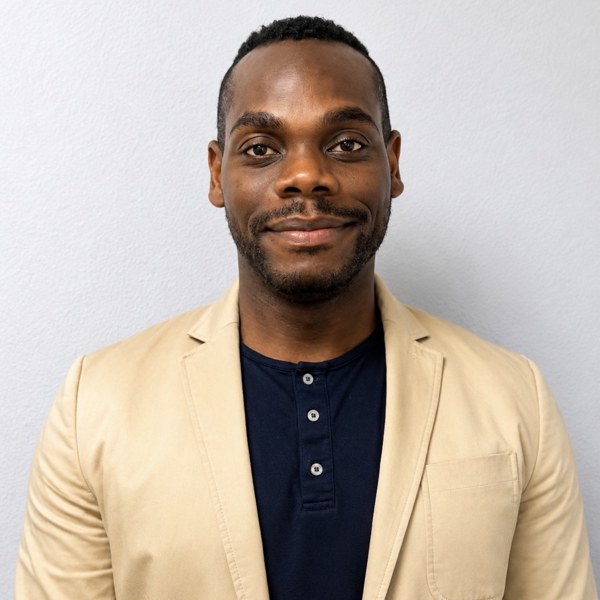
My research advances dance archiving, digital humanities, and experimental performance through Africanist and global practices. The work is rooted in Africanist traditions and outward-looking in its frameworks, asking how dance can be more justly accessed, preserved, and disseminated in today's archival landscape. I investigate where dances originate, how they diffuse across bodies and geographies, and how systems of knowledge can reflect the embodied flow of movement rather than freeze it. This question has been the through-line of my work since my undergraduate thesis on developing contemporary Nigerian dance, and it continues to drive the computational, theoretical, and creative research I am building now.
Theatre Arts, Benin City
I developed my dancing and my focus on African contemporary dance. In Benin City I performed with the Edo State Arts Council at National Arts Festivals in Minna, Niger State, and at the Abuja arts festival, and I was commissioned to choreograph the troupe for the Akwa Ibom National Arts Festival (NAFEST).
Ugho, from Edo, is one of the dances now in the corpus.
WXYZ Arts Factory, Nigeria
From 2009 to 2013 I was the founder and artistic director of WXYZ Arts Factory.
WXYZ Arts Factory turned into Sinclair Dance in Washington, DC.
The MFA, College Park
I took my Master of Fine Arts at the University of Maryland. In 2013 I was on fellowship, studying and not teaching. From 2014 to 2016 I was a graduate assistant and taught two classes each semester.
I taught my own classes. I created a West African dance curriculum and taught it for two years.
Sinclair Dance, Washington
Sinclair Dance was making work in the Washington area through these years.
I danced at the Peace Ball at the National Museum of African American History and Culture in 2017, and the Kennedy Center followed in 2019 and 2020.
Virginia Commonwealth University, Richmond
From 2019 to 2024 I taught at Virginia Commonwealth University, where I led Living Archive, a project on the analysis and description of African dance.
The question had become a research program with instruments attached.
The University of Texas, Austin
I came to the University of Texas at Austin in 2024.
The laboratory, the Movement Language Model and the Movement Journal all live at UT Austin now, and the work has become the building of an instrument for reading movement. I run the SEE Lab as a funded research lab.
The Lab →